
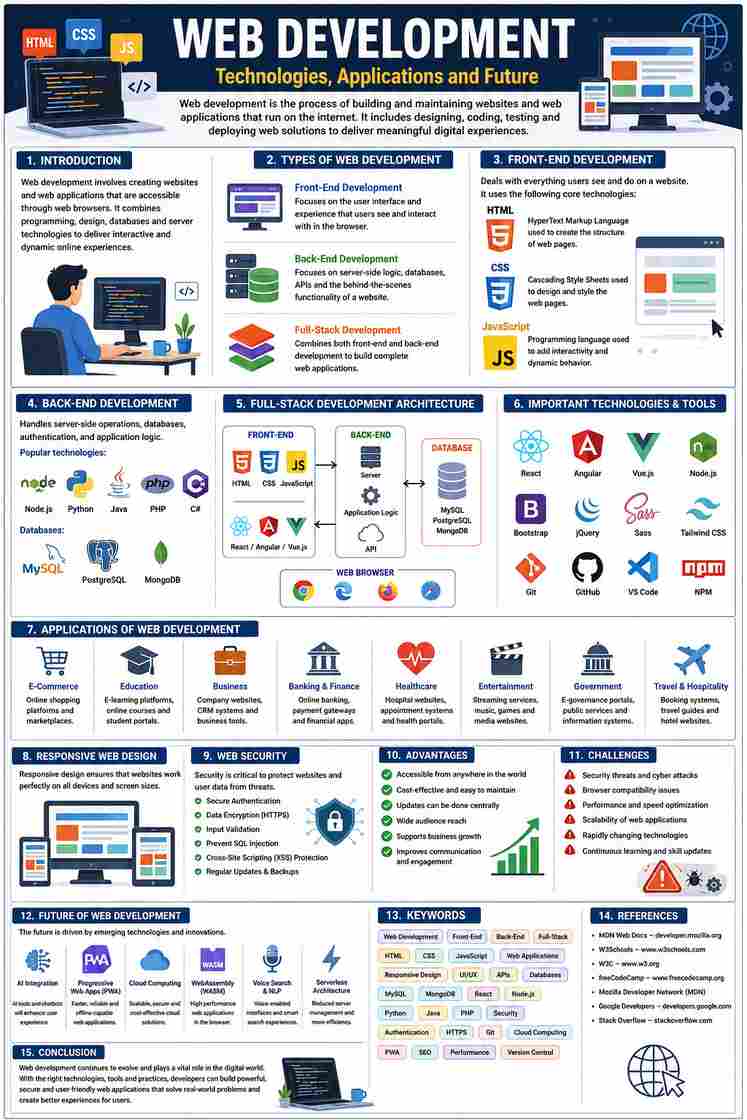
Web Development: Technologies, Applications and Future
Web development plays a major role in the digital world by enabling people and organizations to create websites and web applications. Technologies such as HTML, CSS, JavaScript, databases, frameworks, and cloud services work together to create modern online platforms. With continuous advancements in AI, security, and cloud computing, web development will continue to evolve and provide new opportunities for developers and businesses
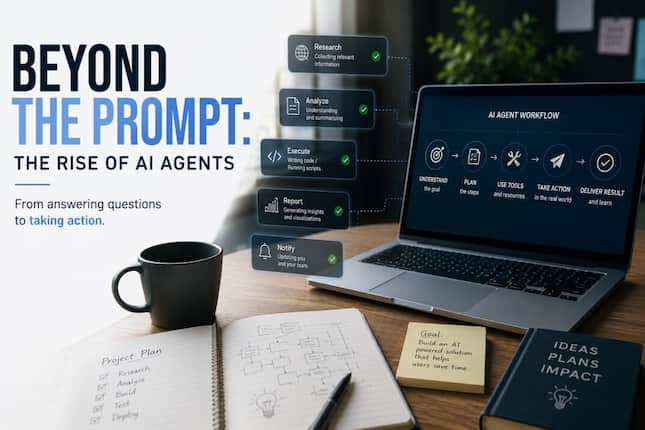
Beyond the Prompt: The Rise of AI Agents
The article explores AI agents, a new generation of AI that can understand goals, plan tasks, use tools, and take action instead of simply answering questions. It discusses their applications in software development, education, business, and research, while highlighting the need for security and human supervision. It also explains why strong CSE fundamentals remain important in an AI-driven future.

Cloud 3.0: The Intelligent Infrastructure Revolution
Cloud 3.0 marks a shift from passive hosting to autonomous, intelligent infrastructure. By integrating cloud computing with AI, automation, edge intelligence, and Zero Trust security, it creates self-healing, cost-optimized environments that anticipate needs in real time. This article breaks down the evolution from Cloud 1.0 to 3.0, its core technical pillars, real-world industry applications, and how it is redefining engineering careers for the future.
The Shift to Small Language Models: Efficiency at the Edge
Small Language Models (SLMs) are emerging as a pivotal alternative to massive LLMs, offering high performance with reduced hardware constraints. For engineering students, this shift signifies a move toward sustainable, privacy-conscious AI deployment directly on edge devices, enabling sophisticated natural language processing without relying on cloud-based infrastructure for every inference task and data processing cycle.
Quantum Cryptography: Preparing for the Post-Quantum Era
As quantum computing matures, current encryption standards face an existential threat. This article explores Post-Quantum Cryptography (PQC) and the migration strategies organizations must adopt to protect sensitive data from future 'harvest-now, decrypt-later' attacks, providing a vital roadmap for engineering students interested in the intersection of advanced mathematics, security protocols, and long-term data protection.
Edge AI and the Intelligence of Connected Objects
Edge AI is revolutionizing IoT by moving data processing from the cloud to the device. By reducing latency and enhancing privacy, this technology is enabling real-time analytics for autonomous systems. This article examines the hardware-software synergies required to deploy intelligent, self-sustaining neural networks on resource-constrained platforms within modern engineering environments.
Department Activities
01 Text Book Published
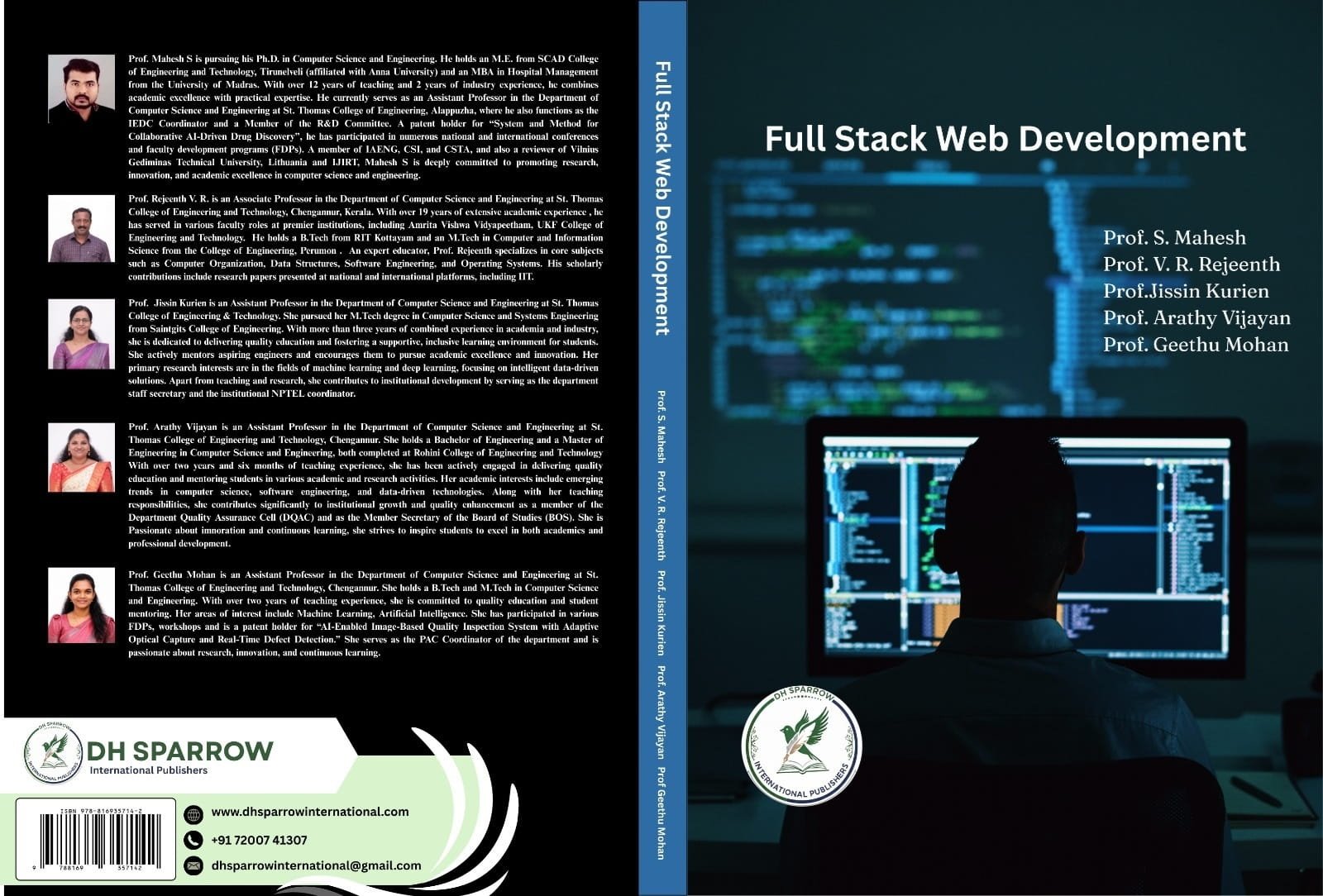
The Department of Computer Science and Engineering is proud to announce the publication of a comprehensive textbook titled Full Stack Web Development by DH Sparrow International Publishers. Authored by Prof. S. Mahesh, Prof. V. R. Rejeenth, Prof. Jissin Kurien, Prof. Arathy Vijayan, and Prof. Geethu Mohan, the work serves as an essential resource for the S6 Elective Course. This industry-oriented guide offers students practical expertise in modern web frameworks and development techniques. The achievement underscores the department's unwavering dedication to academic excellence, innovative pedagogy, and the creation of high-quality educational materials that bridge the gap between classroom theory and evolving global industry standards.
Key Takeaway
CSE faculty publish a comprehensive guide to modern full-stack web development for undergraduate engineering students.
02 Idea Pitch – An Innovative Solutions Challenge
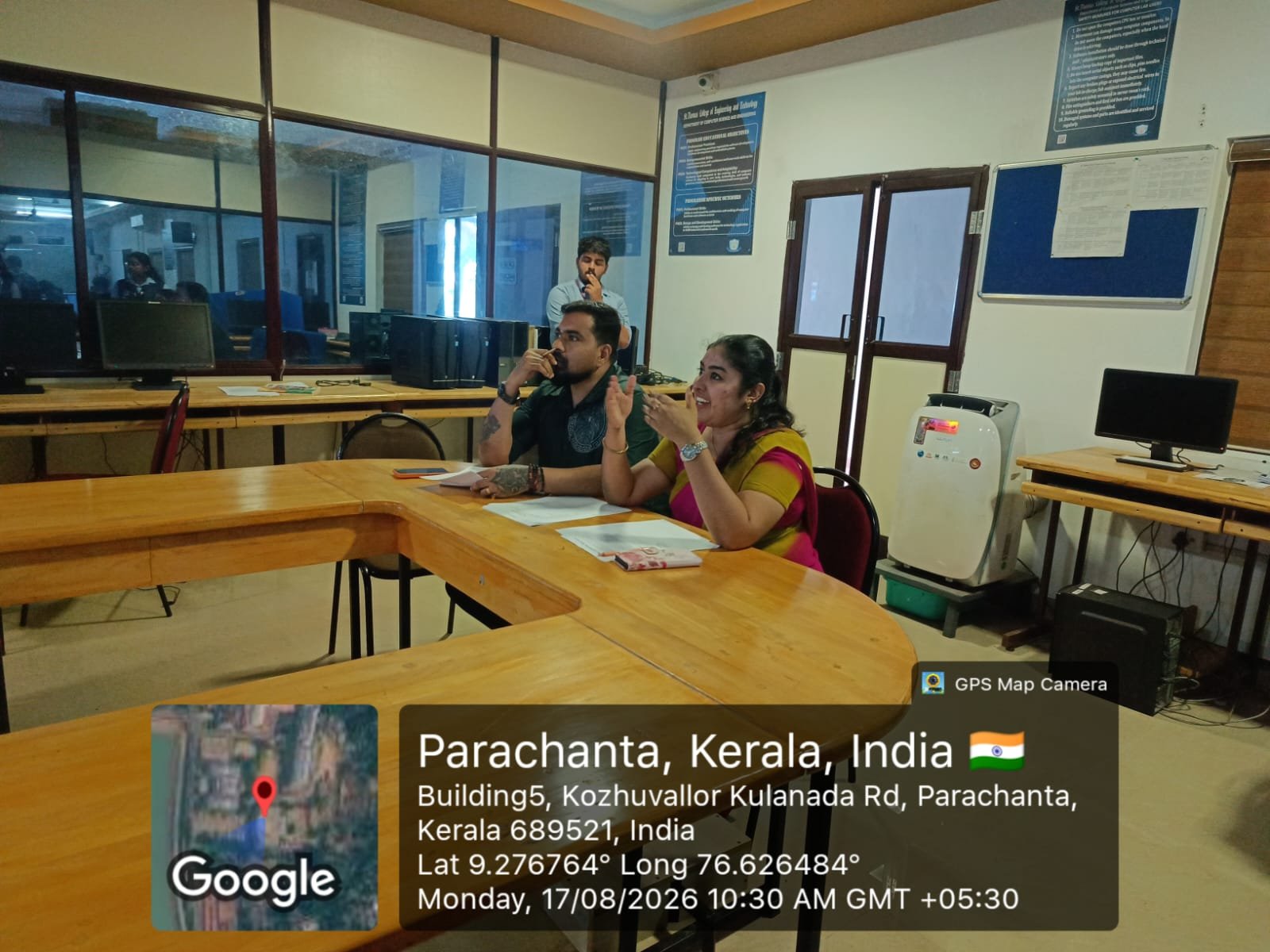
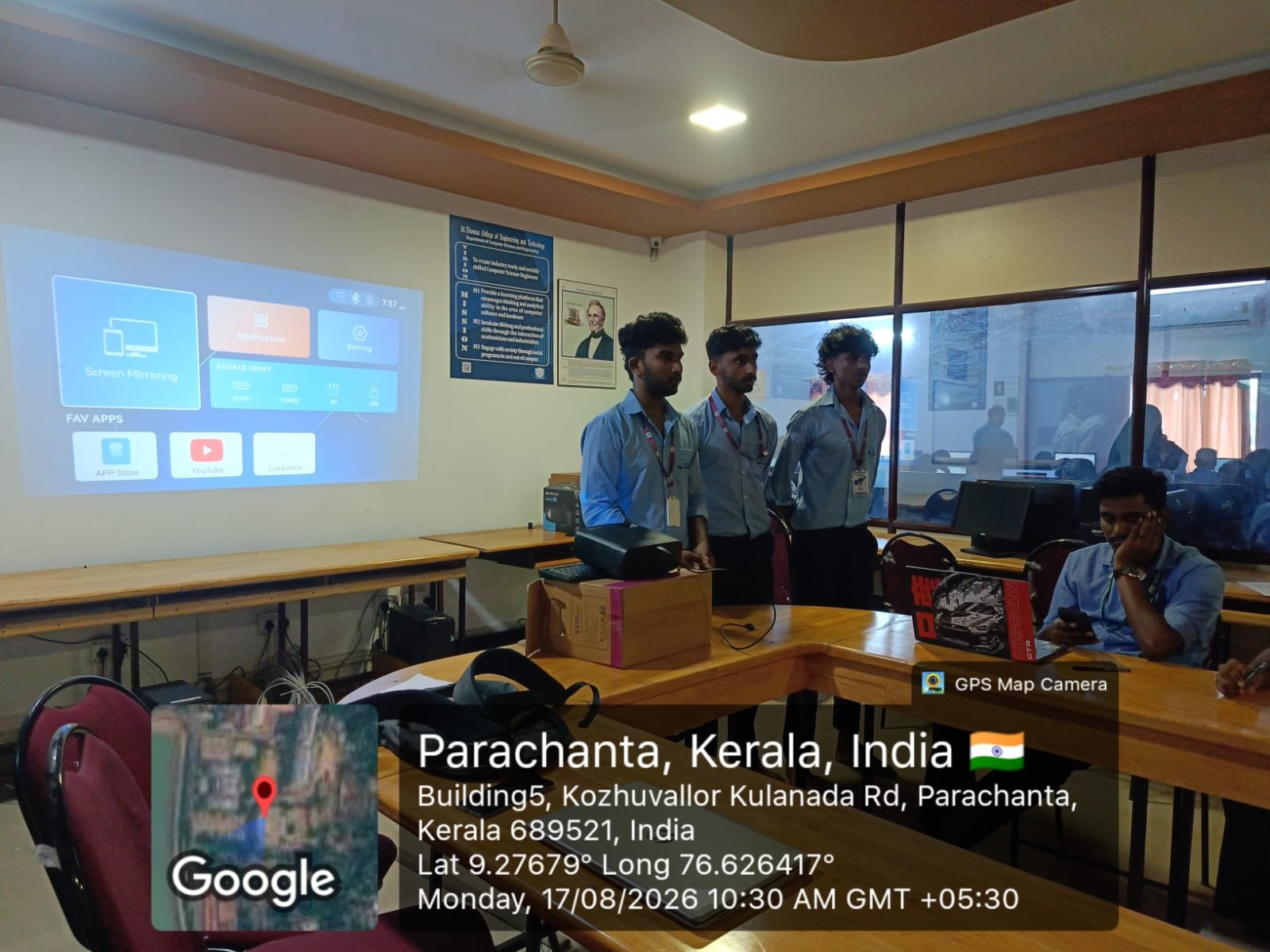
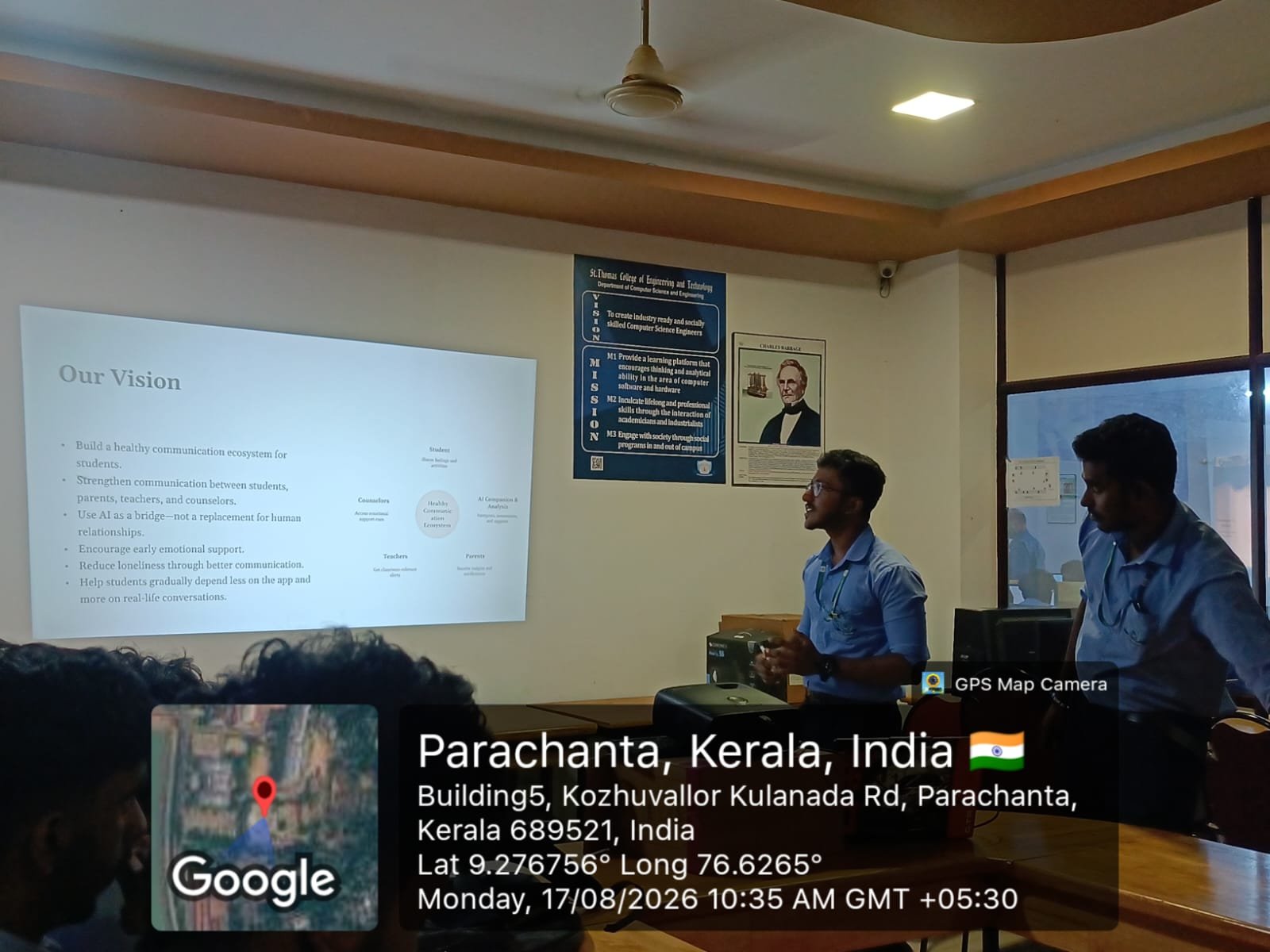
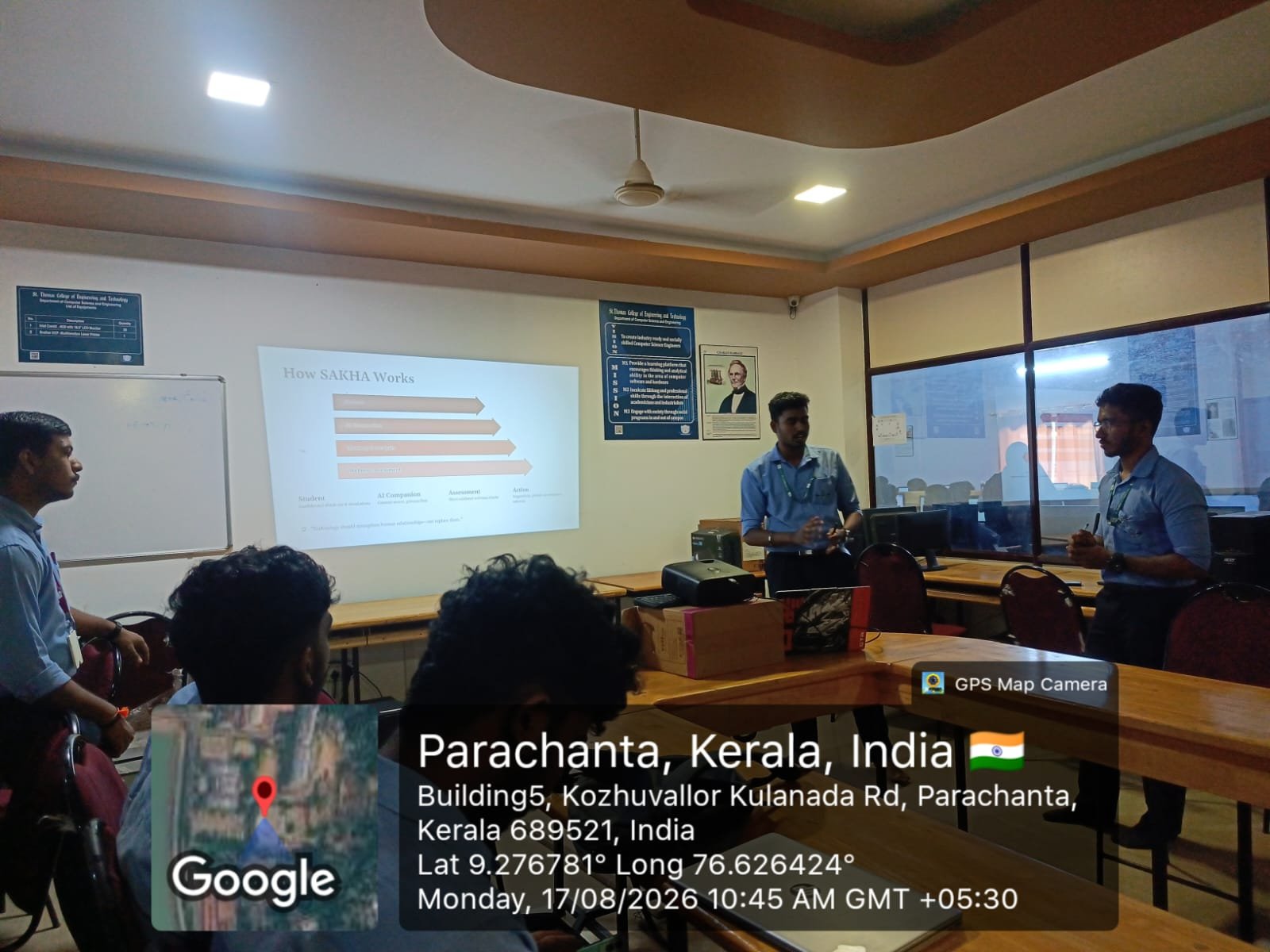
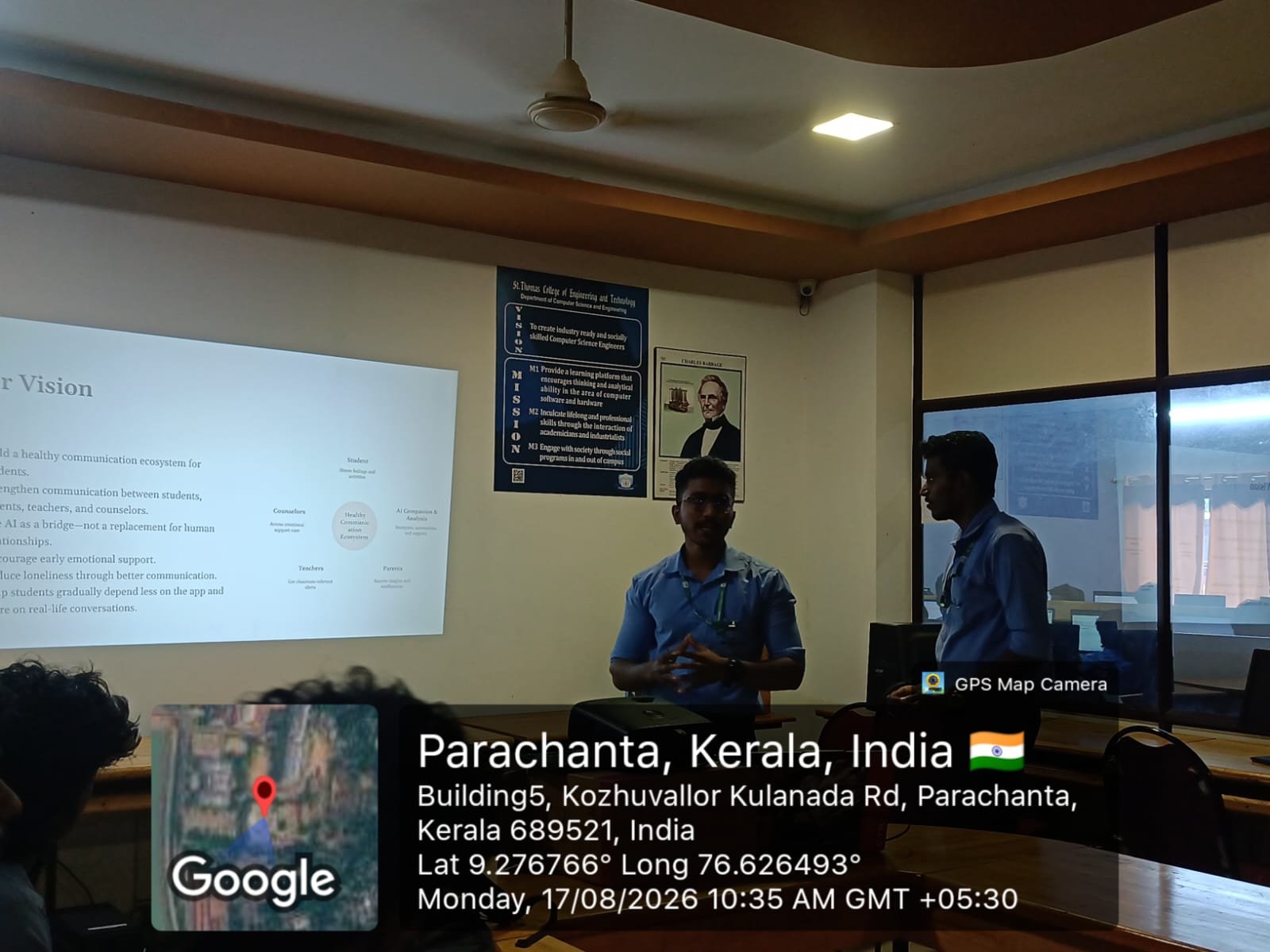
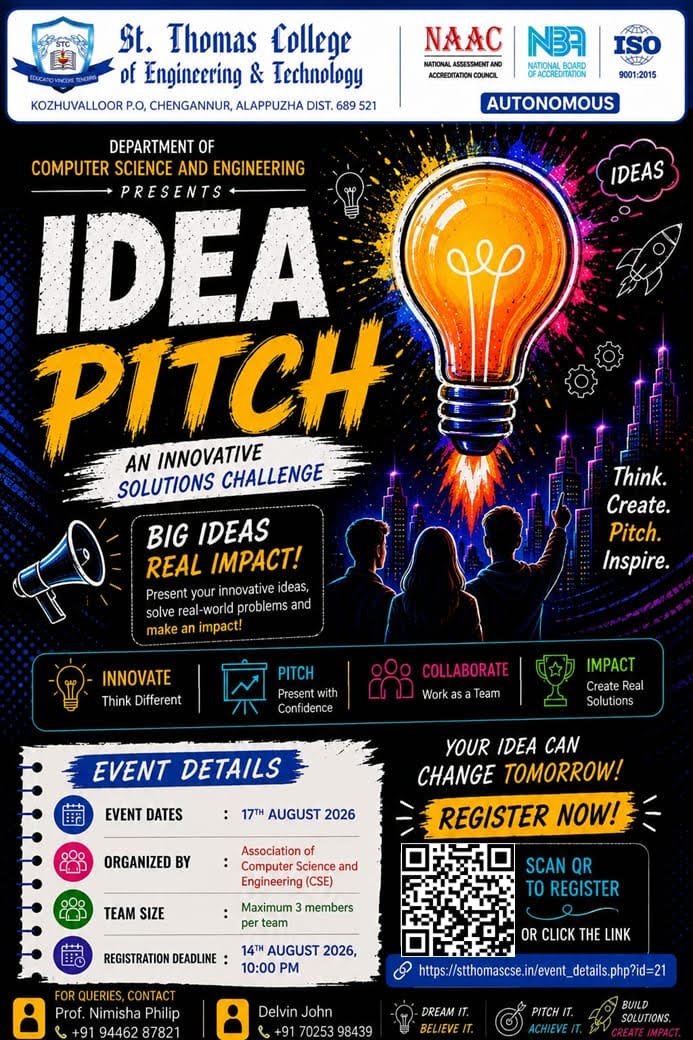
The Association of Computer Science and Engineering successfully hosted a competition designed to address pressing societal challenges through technological innovation. Participants engaged in a rigorous three-round process, beginning with abstract screening followed by detailed solution design and final presentations. Teams were evaluated on their creativity, feasibility, and potential social impact. The event concluded with the recognition of exceptional student projects, awarding the top positions to teams led by Aromal S and Selan Jacob Alex, respectively. This initiative effectively fostered entrepreneurial thinking and practical problem-solving skills, empowering our students to develop actionable solutions for complex real-world issues while demonstrating remarkable intellectual growth.
Key Takeaway
Students developed innovative technical solutions to complex social issues during the department's annual ideation and pitching competition.