
Beyond the Hype: The Architectures Defining Small Language Models
As generative AI matures, the industry is pivoting from massive, parameter-heavy LLMs to hyper-efficient Small Language Models (SLMs). These lean architectures allow for sophisticated reasoning capabilities directly on edge devices, democratizing AI access while drastically reducing the operational costs and latency issues that have previously hindered the large-scale deployment of transformer-based systems in constrained environments.
Quantum Supremacy and the Post-RSA Cryptography Era
Quantum computing is no longer a theoretical exercise but a looming catalyst for a security paradigm shift. As quantum processors reach maturity, they threaten the foundations of asymmetric encryption. Engineering students must prepare for the 'Q-Day' transition by mastering post-quantum cryptographic standards that secure data against the immense processing power of future quantum systems.
The Rise of Confidential Computing in Cloud Infrastructure
Data security is evolving beyond static encryption at rest and in transit. Confidential Computing is introducing a new standard where data is encrypted even while in active use. By leveraging Trusted Execution Environments (TEEs), developers are now able to process sensitive workloads in the cloud without ever exposing raw information to the infrastructure provider.
Autonomous Systems and the Edge AI Paradigm
Moving intelligence from centralized servers to the network edge is defining the future of robotics and IoT. Edge AI processes information locally, enabling sub-millisecond decision-making for autonomous drones, smart factories, and medical devices, effectively eliminating the bandwidth bottlenecks and dependency issues associated with round-trip communications in cloud-centric artificial intelligence architectures.
DevOps 2.0: The Rise of Platform Engineering
DevOps is undergoing a critical transformation as the complexity of cloud-native infrastructure outstrips individual developer capacity. Platform Engineering is emerging as the new standard, focusing on building Internal Developer Platforms that abstract the underlying complexities of Kubernetes and microservices, allowing teams to ship high-quality software with increased velocity and reduced operational overhead.
The Data Engineering Lifecycle: Beyond Simple Analytics
Modern Data Science is shifting from exploratory analysis to the construction of robust, production-grade data pipelines. As the volume and velocity of data reach unprecedented levels, the role of the Data Engineer becomes central to organizational success, ensuring the integrity, scalability, and accessibility of data for real-time machine learning and advanced analytical workflows.
Department Activities
01 Patent Published
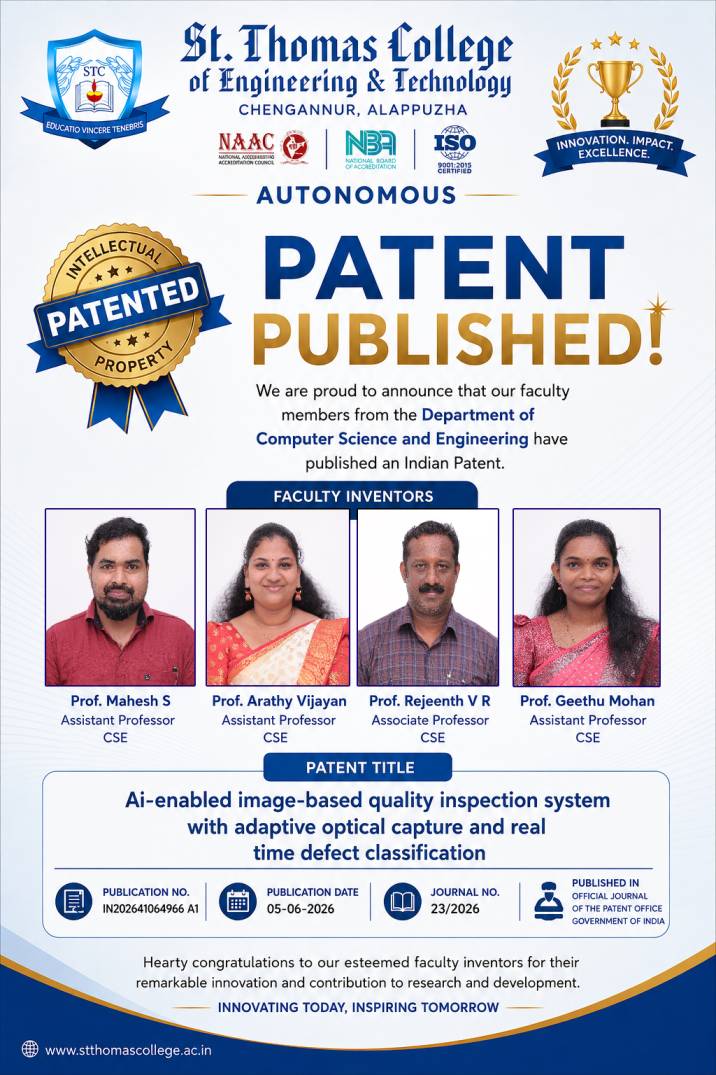
Faculty members from the Department of Computer Science and Engineering have achieved a significant intellectual property milestone with the publication of an Indian Patent, number IN202641064966 A1. The research introduces an advanced AI-enabled image-based quality inspection system, integrating adaptive optical capture with real-time defect classification to enhance precision in industrial automation. This accomplishment, credited to Professors Rejeenth V R, Mahesh S, Arathy Vijayan, and Geethu Mohan, underscores the institution’s commitment to driving technological innovation. By addressing complex challenges in quality control, this patent highlights the department's capacity for high-impact research and its ongoing contribution to contemporary engineering solutions within the national academic landscape.
Key Takeaway
Faculty achieve Indian Patent for innovative AI-enabled industrial quality inspection system.
02 Patent Published
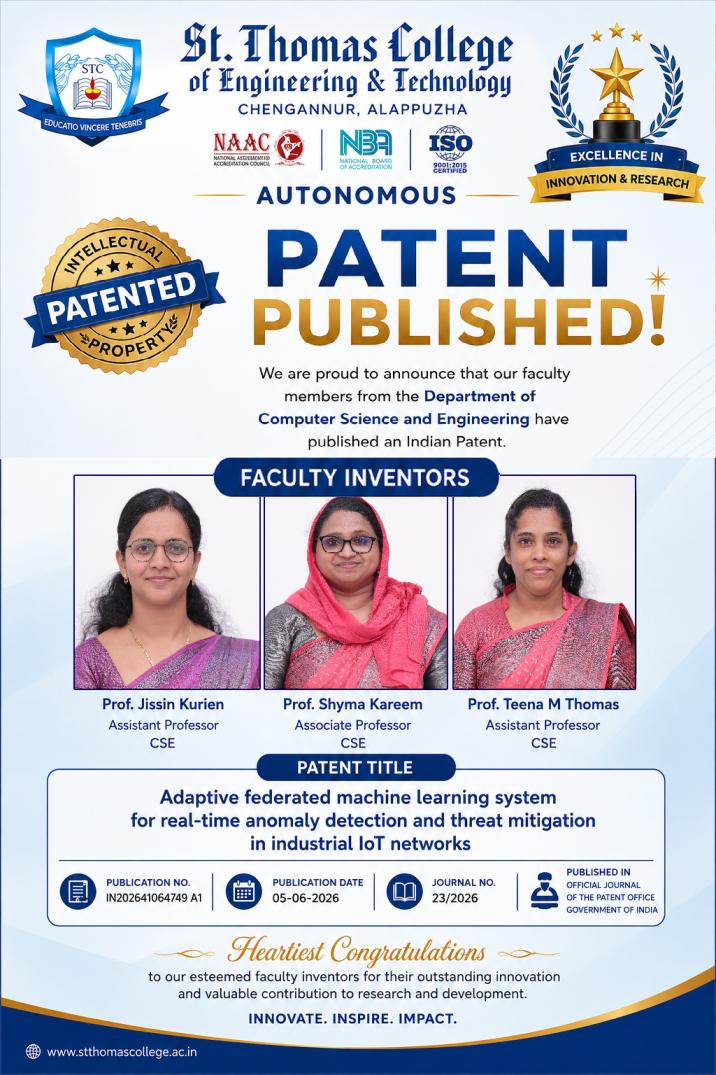
The Department of Computer Science and Engineering has successfully secured an Indian Patent, designated as IN202641064966 A1, for a groundbreaking adaptive federated machine learning system. Developed by Professors Shyma Kareem, Jissin Kurien, and Teena M Thomas, this technology offers a robust solution for real-time anomaly detection and threat mitigation within industrial IoT networks. This achievement reflects the institution's strategic emphasis on cybersecurity research and its dedication to fostering academic excellence. The successful publication serves as a testament to the faculty's expertise, significantly enhancing the college’s research footprint while providing critical advancements to protect modern interconnected industrial environments from evolving digital threats.
Key Takeaway
New patent awarded for adaptive federated machine learning system enhancing IoT cybersecurity.
03 NSS- Regional Coordinator of Rudhirasena
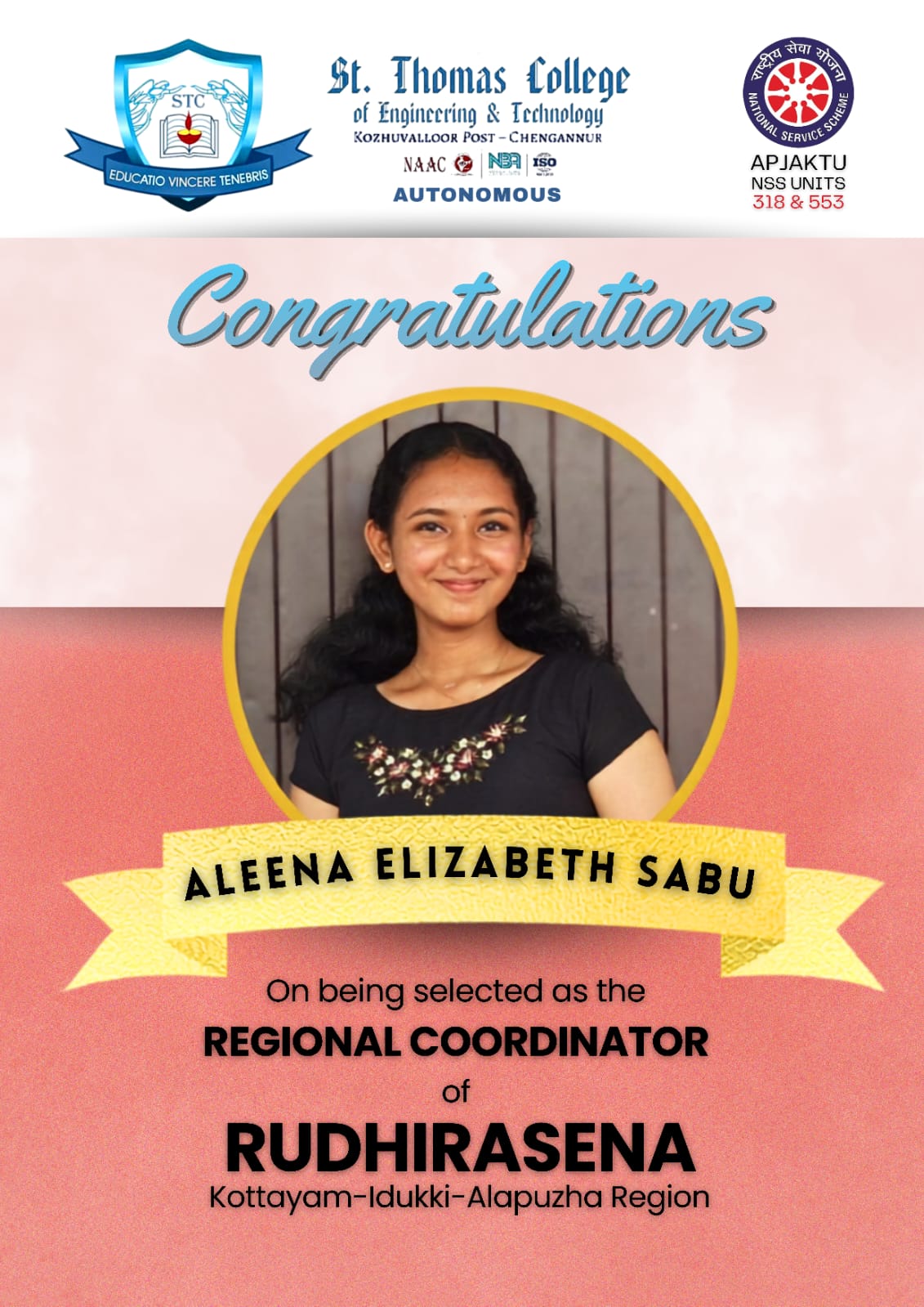
Ms. Aleena Elizabeth Sabu, a dedicated NSS volunteer at St. Thomas College of Engineering & Technology, has been appointed as the Regional Coordinator of Rudhirasena for the Kottayam–Idukki–Alappuzha region. This prestigious selection marks the fourth consecutive year that a student from the institution has held this leadership role, highlighting a sustained commitment to humanitarian service and blood donation advocacy. By assuming this responsibility, Ms. Sabu will spearhead regional initiatives, continuing the college’s legacy of civic engagement and leadership development. The academic community celebrates this appointment as a recognition of her exceptional volunteerism and the institution's robust culture of social responsibility.
Key Takeaway
NSS volunteer appointed as Rudhirasena Regional Coordinator, continuing a four-year leadership legacy.
04 5 Day FDP on Artificial Intelligence Tools for Innovative Teaching Pedagogy
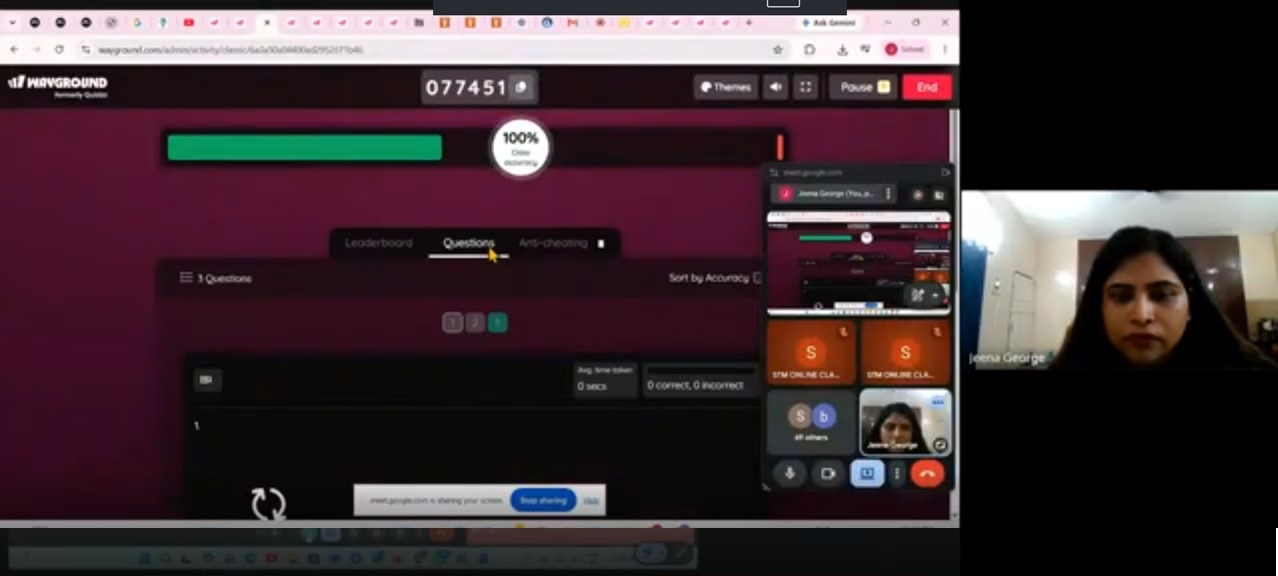
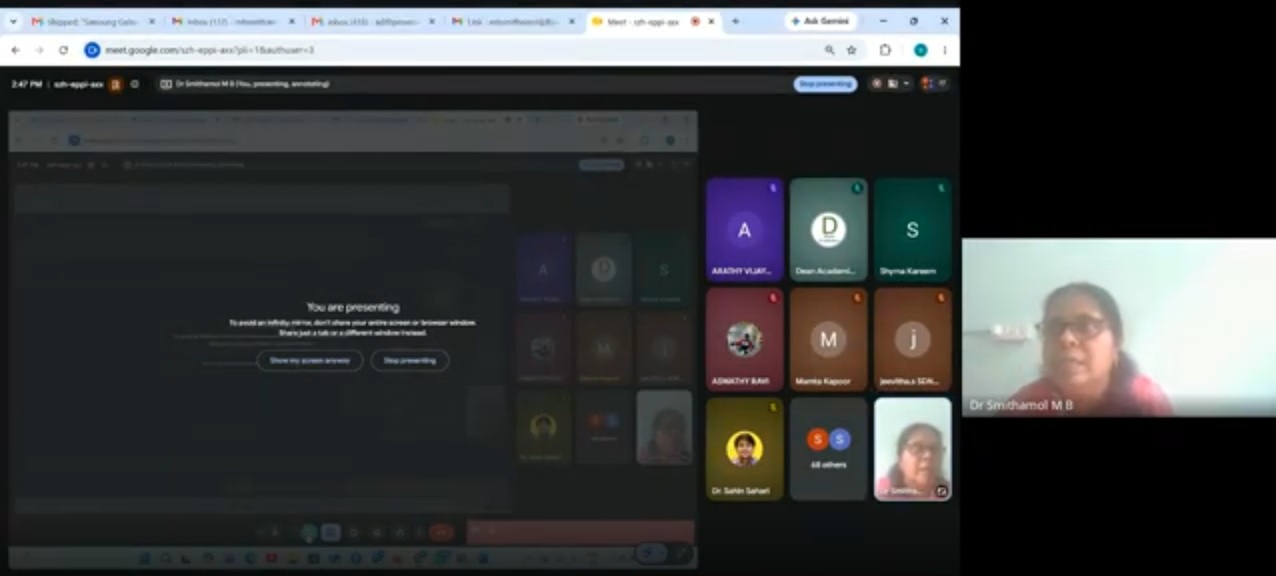
The Department of Computer Science and Engineering is facilitating a five-day online Faculty Development Programme focused on Artificial Intelligence Tools for Innovative Teaching Pedagogy from June 22 to 26, 2026. The program aims to equip educators with advanced strategies for integrating AI into classrooms, including the design of adaptive learning resources and automated assessment rubrics. Furthermore, participants will explore the ethical application of AI in academic research, literature reviews, and scholarly writing. This initiative is designed to empower faculty members to enhance instructional quality and streamline administrative tasks, ensuring that pedagogical methods remain aligned with contemporary technological advancements in education.
Key Takeaway
Upcoming faculty development program on integrating AI tools into modern teaching pedagogy.
05 5 day Internship on Advanced Python Programming, Automation and Application Development (2025 -29 batch)
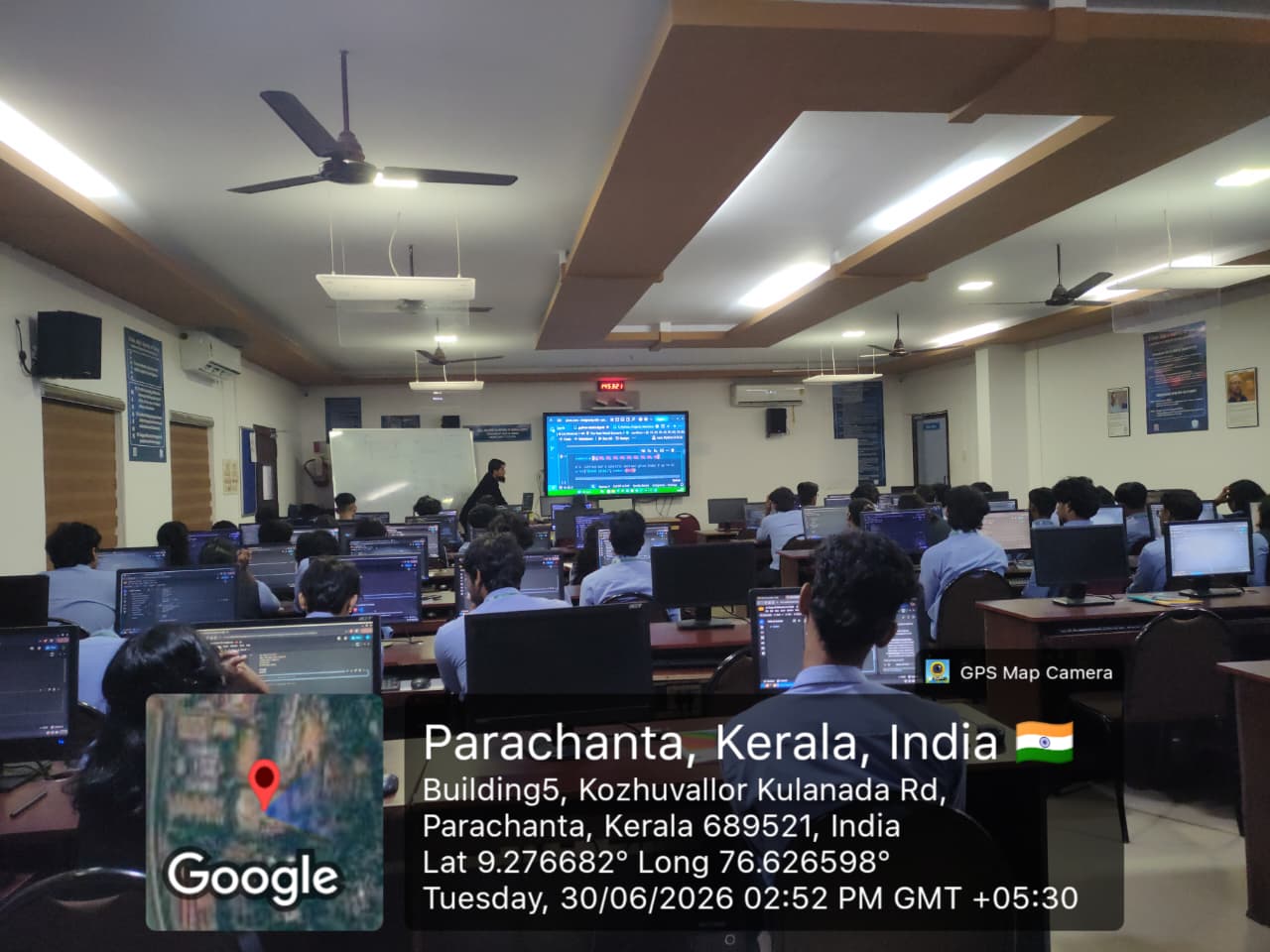
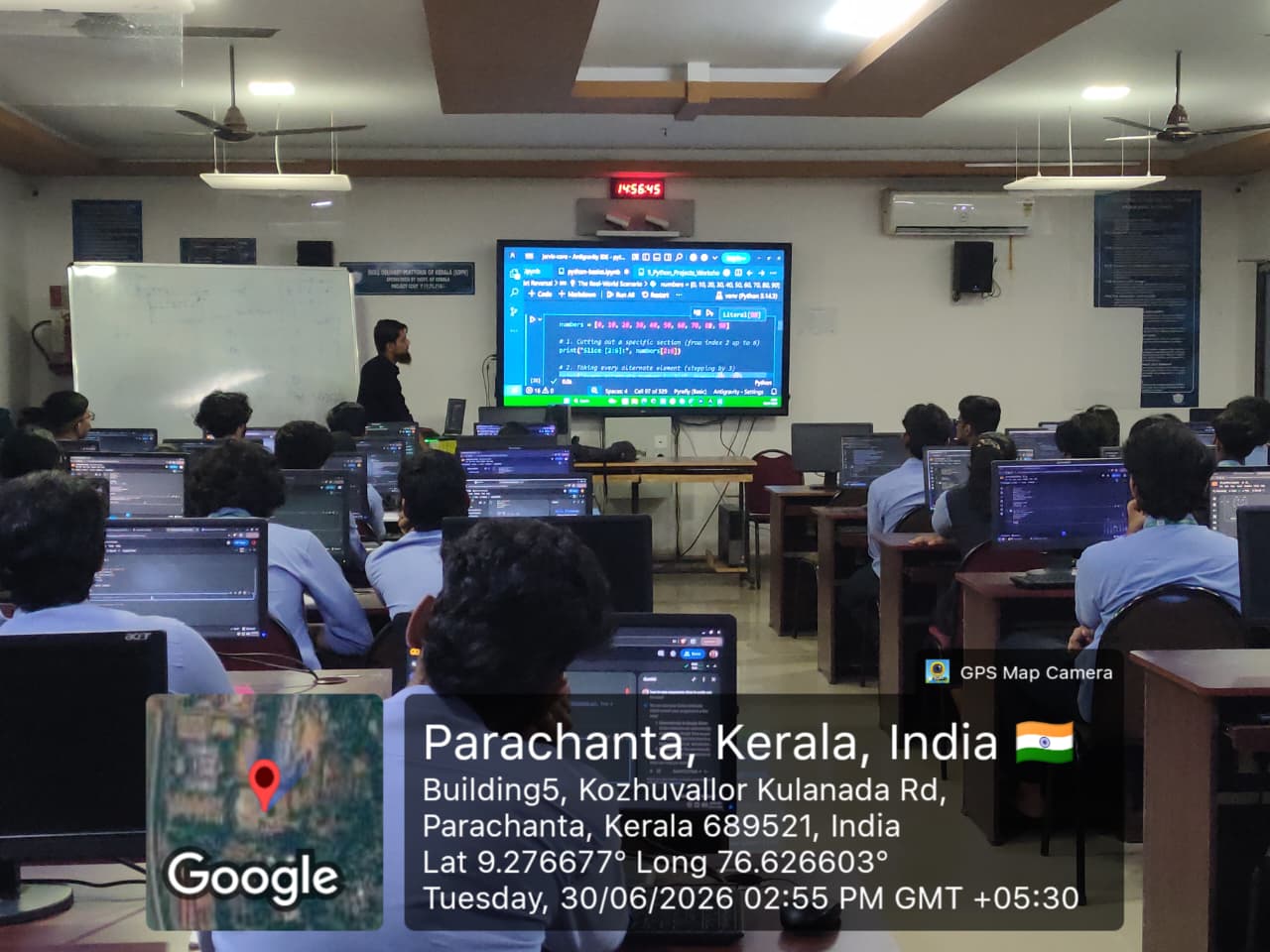
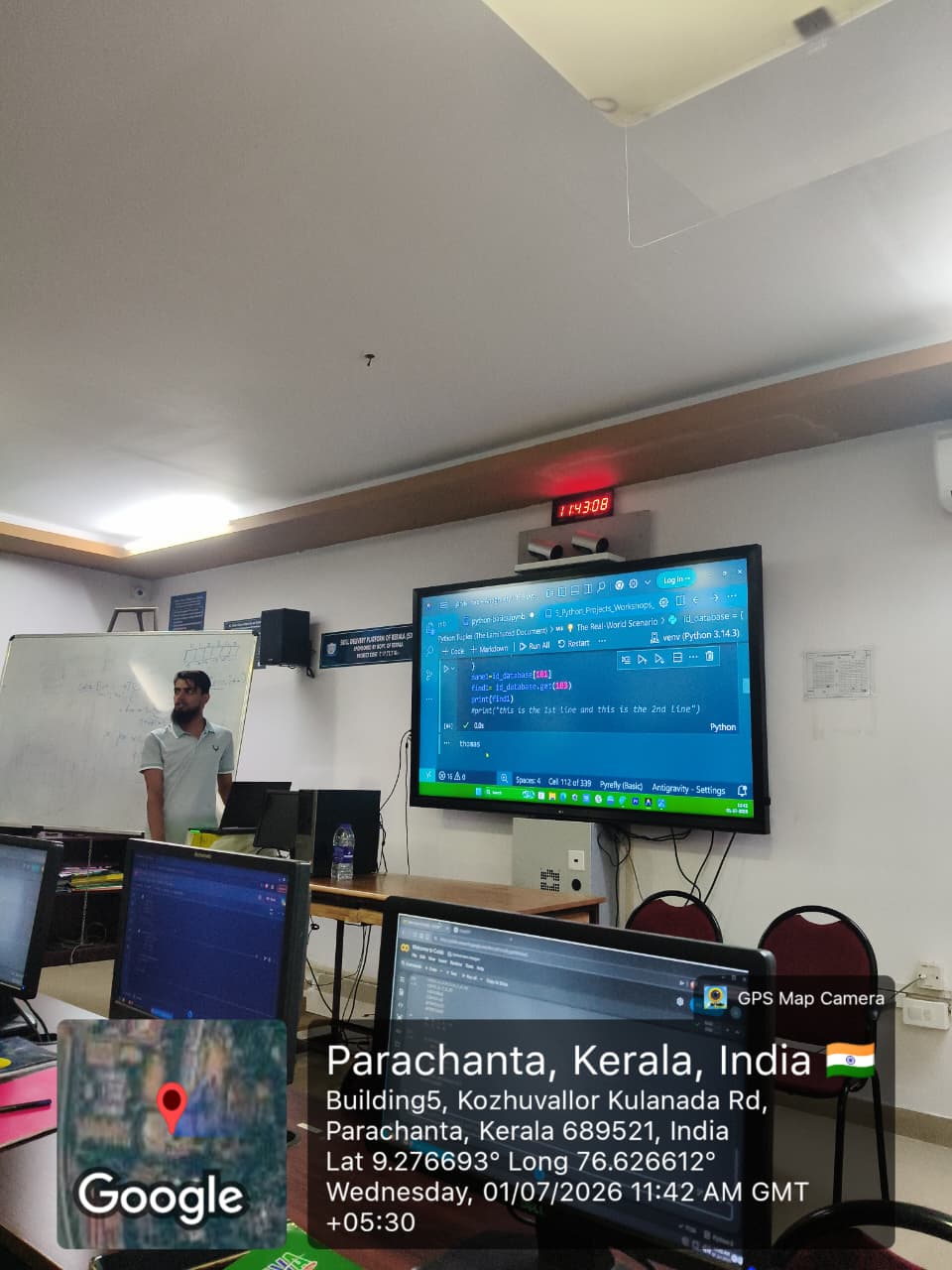
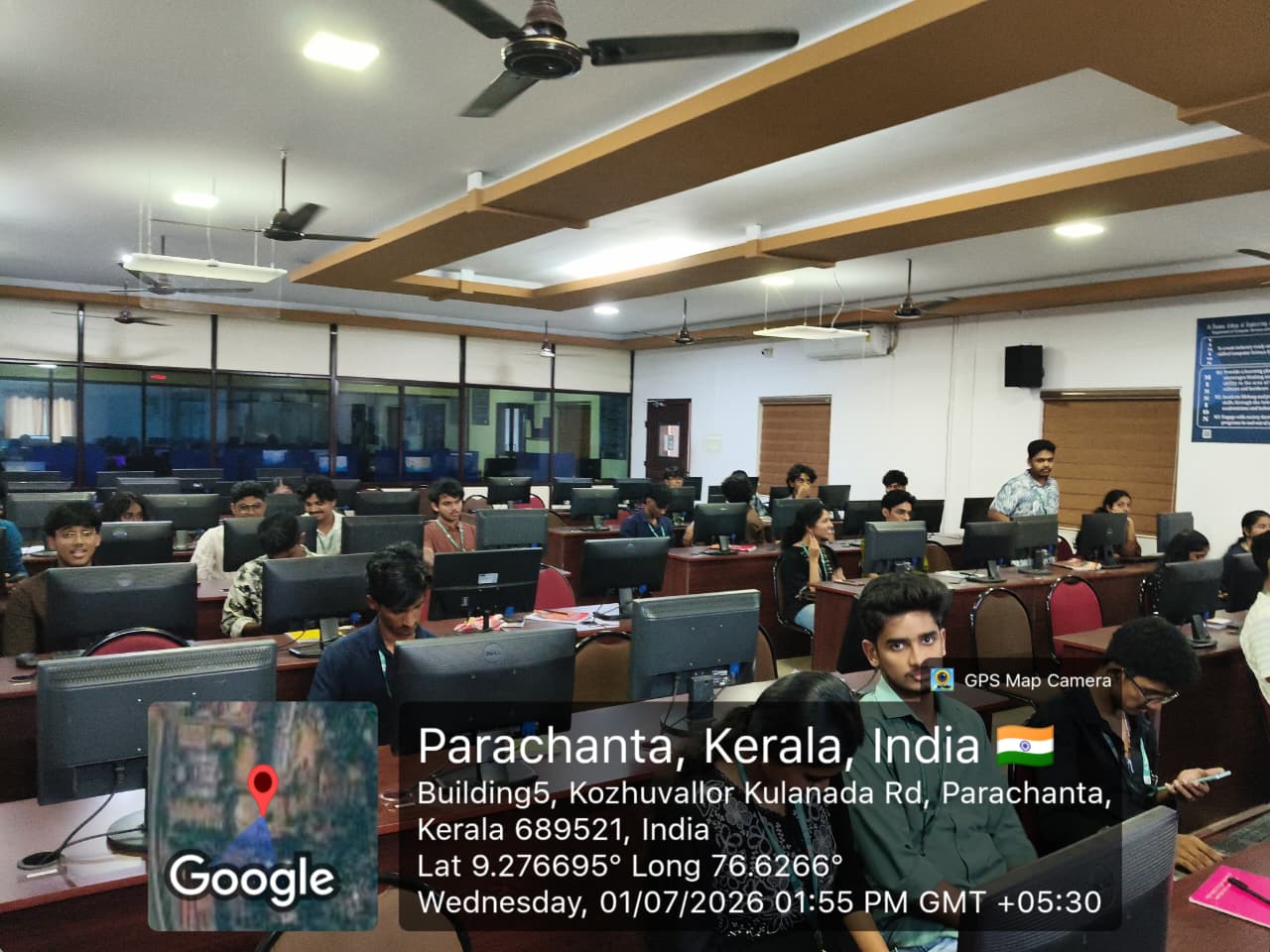
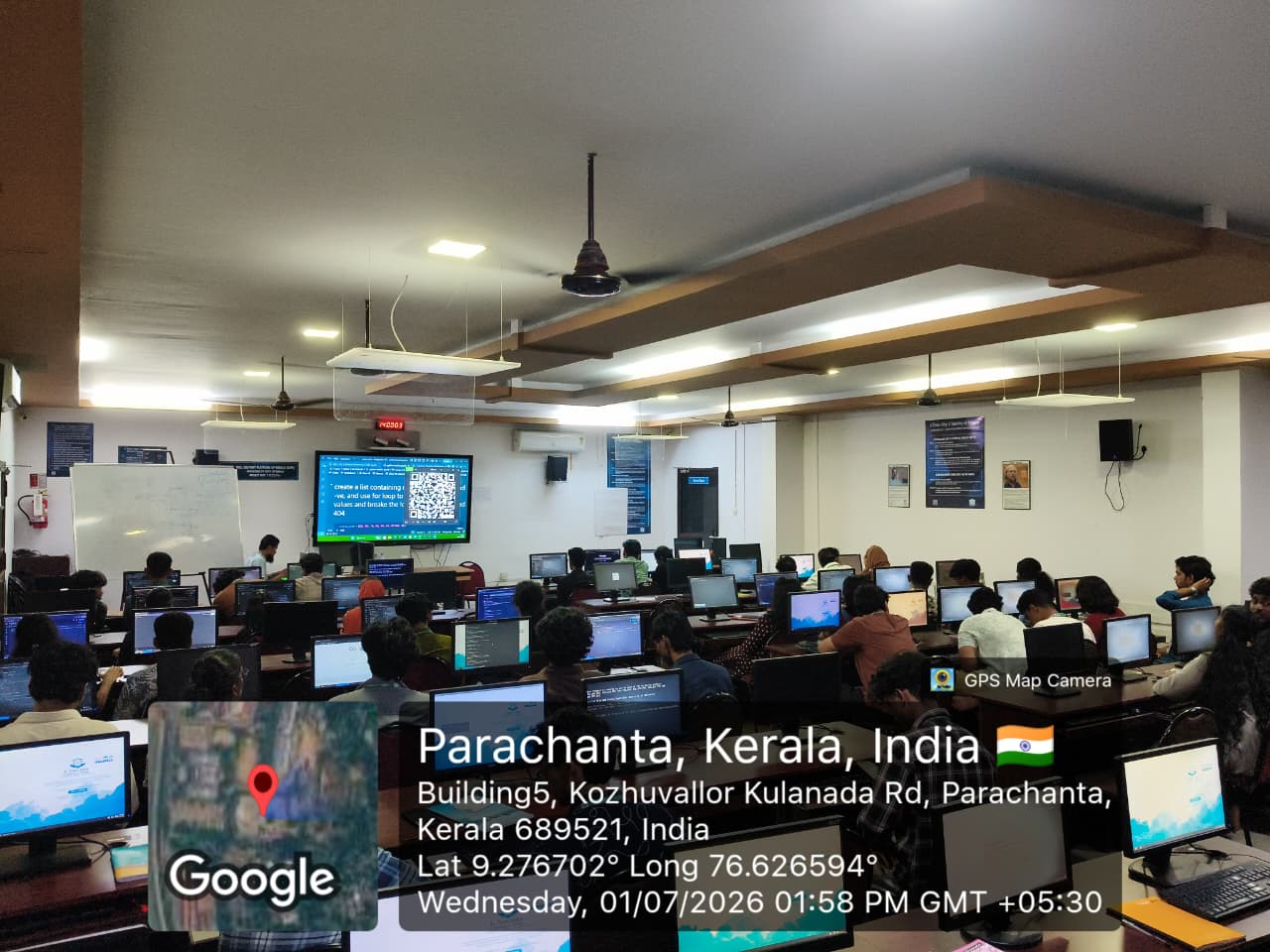
To support the 2025-29 batch of Computer Science and Engineering students, the department is hosting a specialized five-day internship program on Advanced Python Programming, Automation, and Application Development. Scheduled from June 29 to July 3, 2026, this training follows the conclusion of the second-semester examinations. The program is curated to provide students with hands-on experience in high-demand technical domains, bridging the gap between theoretical coursework and practical industrial application. By fostering proficiency in automation and software development, this initiative ensures students are well-prepared for advanced academic pursuits and future professional roles within the competitive technology sector.
Key Takeaway
Five-day intensive internship program on advanced Python and automation for undergraduate students.
06 S5 Topper (2023-2027 Batch)
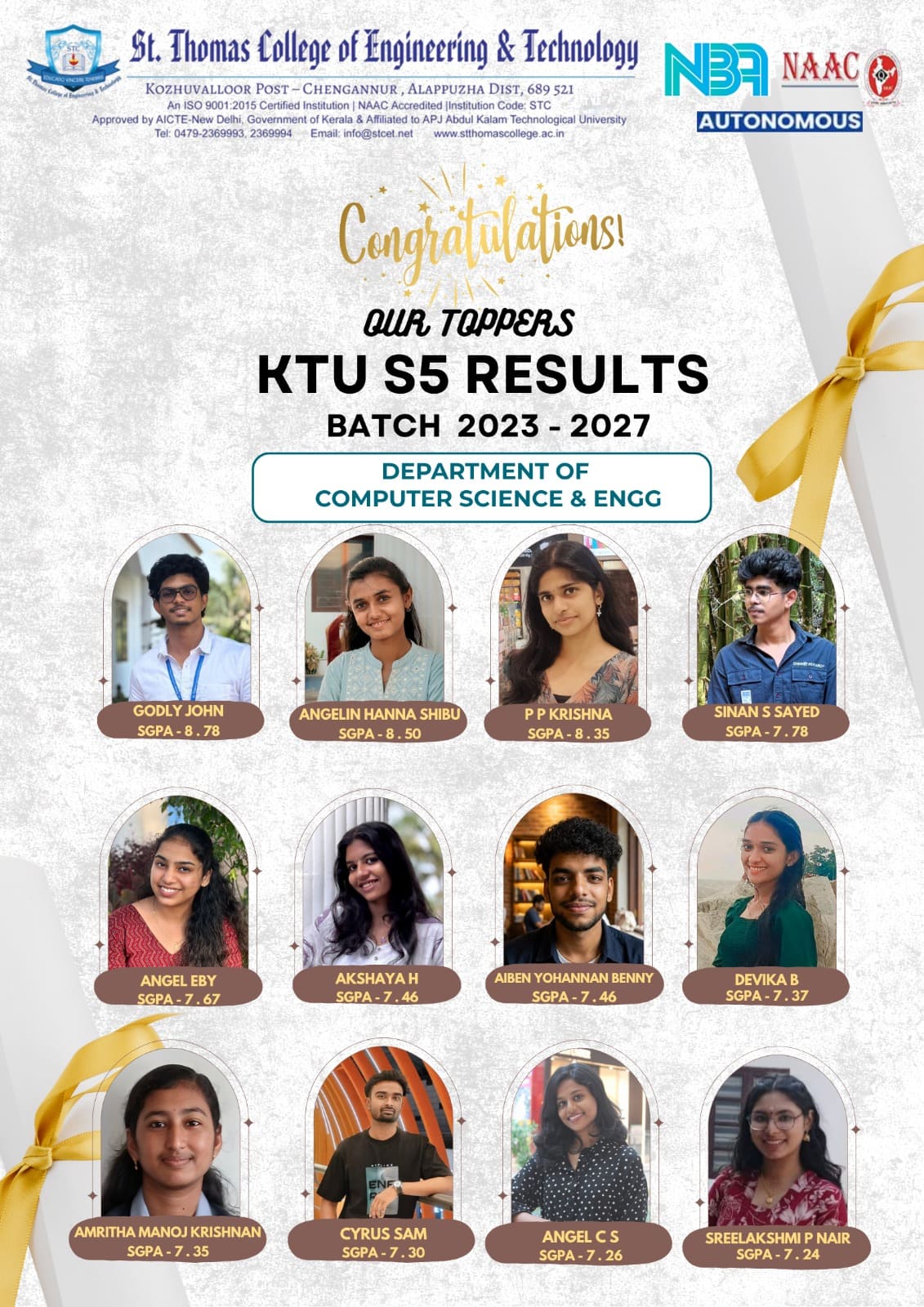
The Department of Computer Science and Engineering proudly recognizes the high-achieving students of the 2023-2027 batch for their exceptional performance in the Semester 5 examinations. The list of toppers is led by Godly John with an impressive SGPA of 9.3, followed by P P Krishna with 9.04, and Angelin Hanna Shibu with 8.59. This academic distinction reflects the students' diligence and the rigorous standards maintained by the department. In recognition of their outstanding results, these students will be awarded formal certificates, celebrating their scholarly commitment and excellence in their technical studies.
Key Takeaway
Top-performing Semester 5 students recognized for academic excellence with outstanding SGPA results.
07 S6 Topper (2023-2027 Batch)
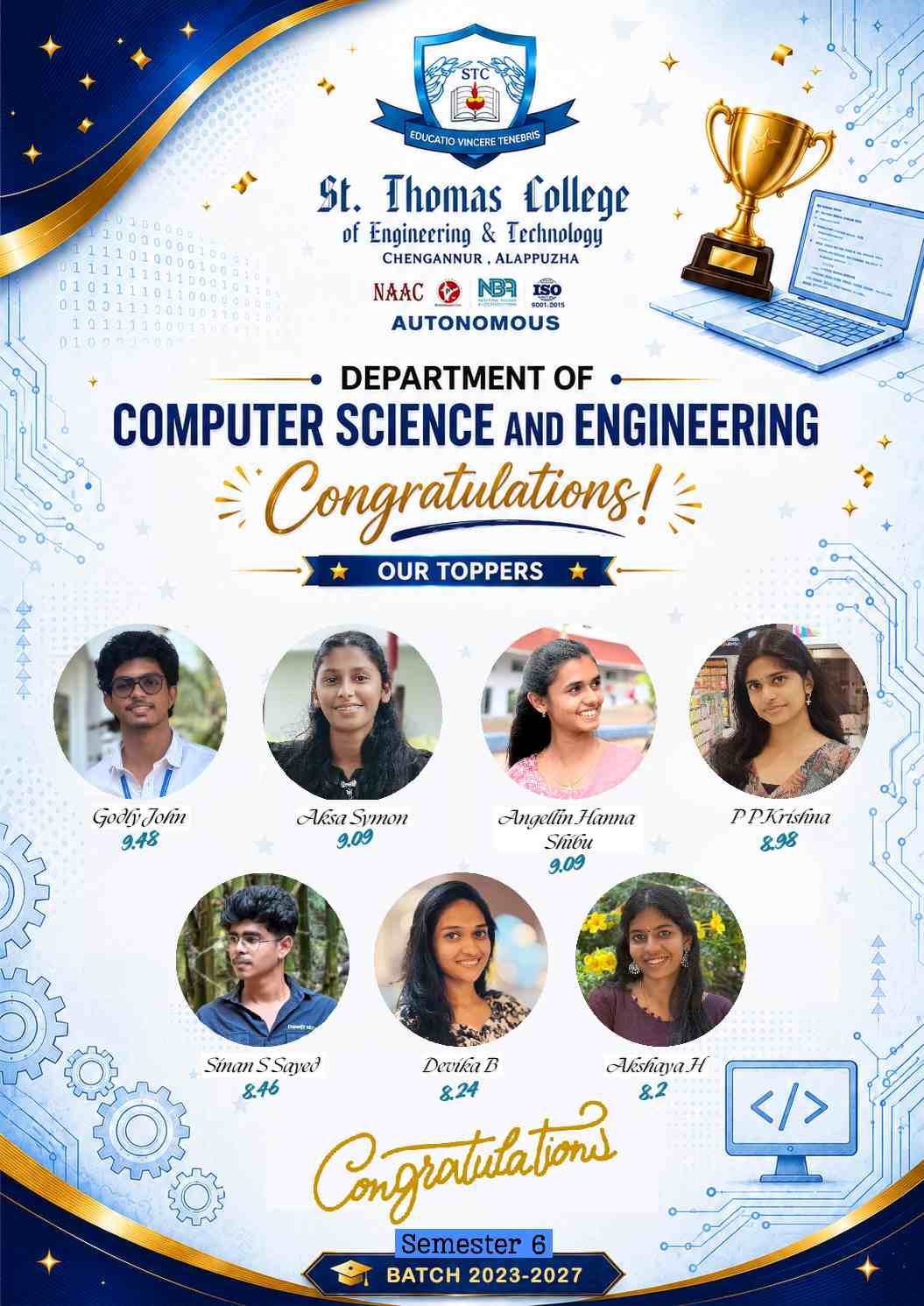
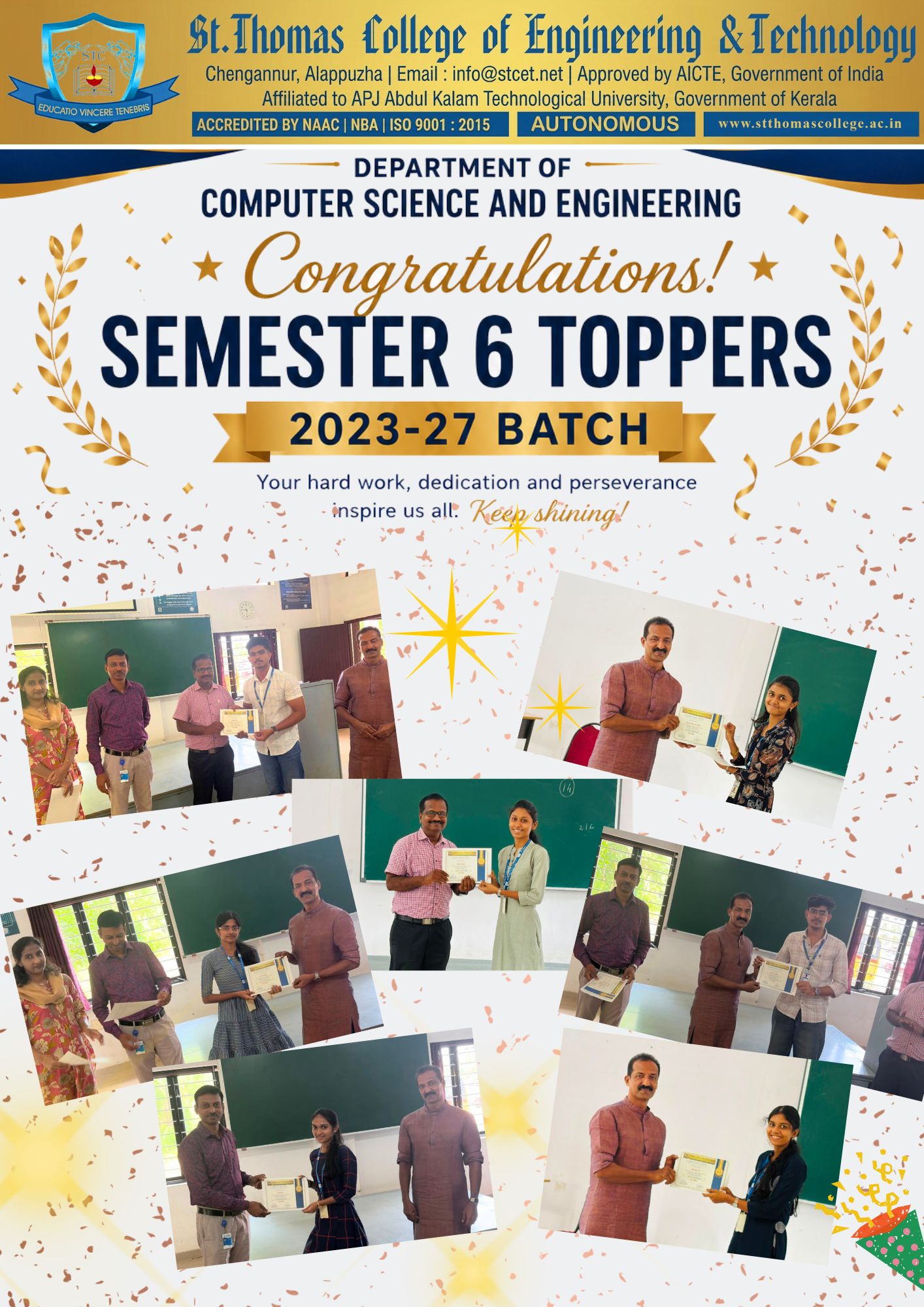
The Department of Computer Science and Engineering has officially released the list of top-performing students for the Semester 6 examinations within the 2023-2027 batch. Godly John secured the top position with an SGPA of 9.48, followed by Aksa Symon and Angelin Hanna Shibu, both achieving 9.09. The list also includes P P Krishna, Sinan S Sayed, Devika B, and Akshaya H, all of whom demonstrated significant academic proficiency. These results serve as a benchmark for student success, highlighting the department's ongoing efforts to foster an environment conducive to high-level academic achievement and professional growth.
Key Takeaway
Semester 6 academic achievers announced, showcasing high scholarly attainment for the 2023-27 batch.
08 S2 Toppers (2025-2029 Batch)
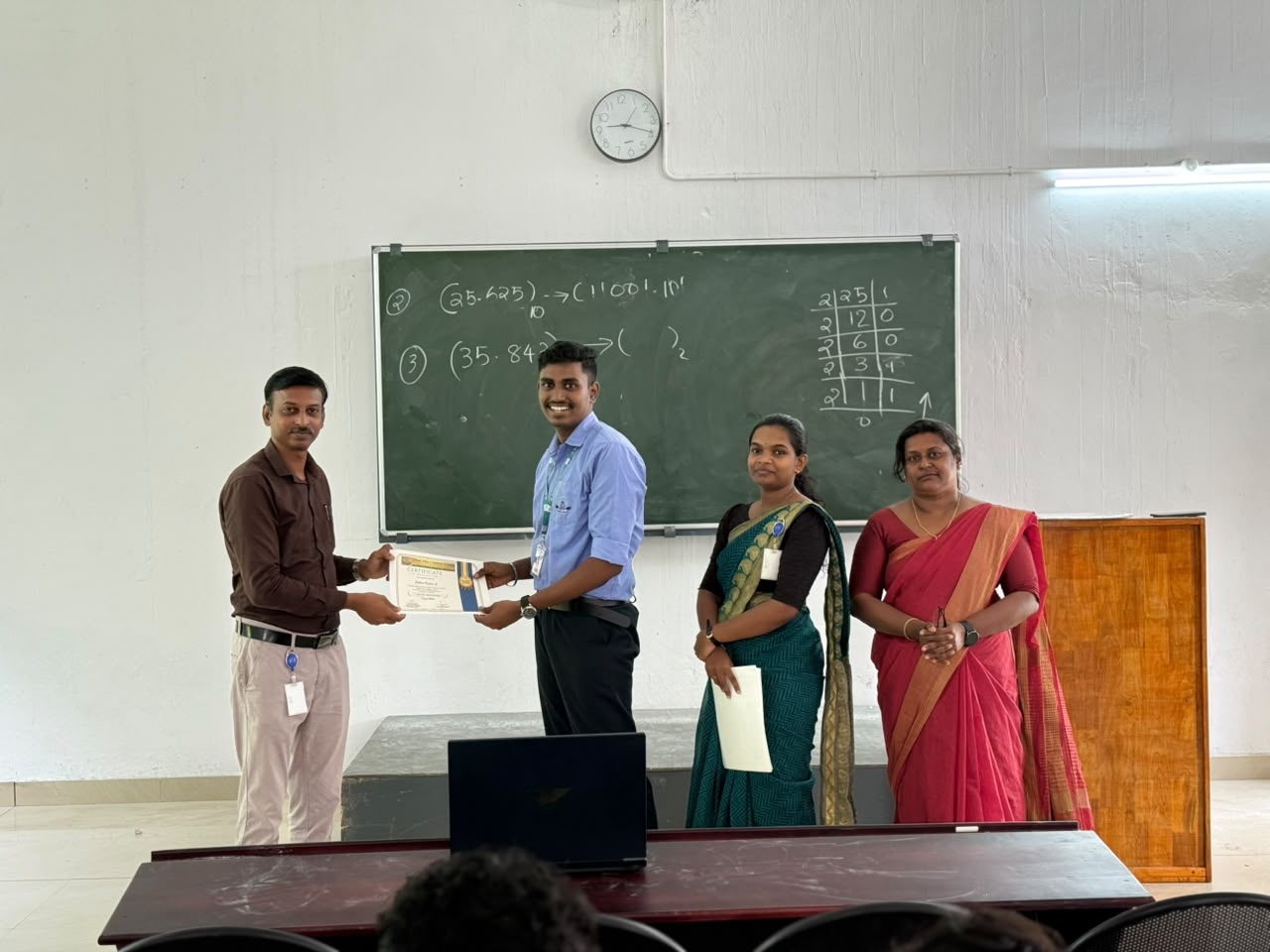
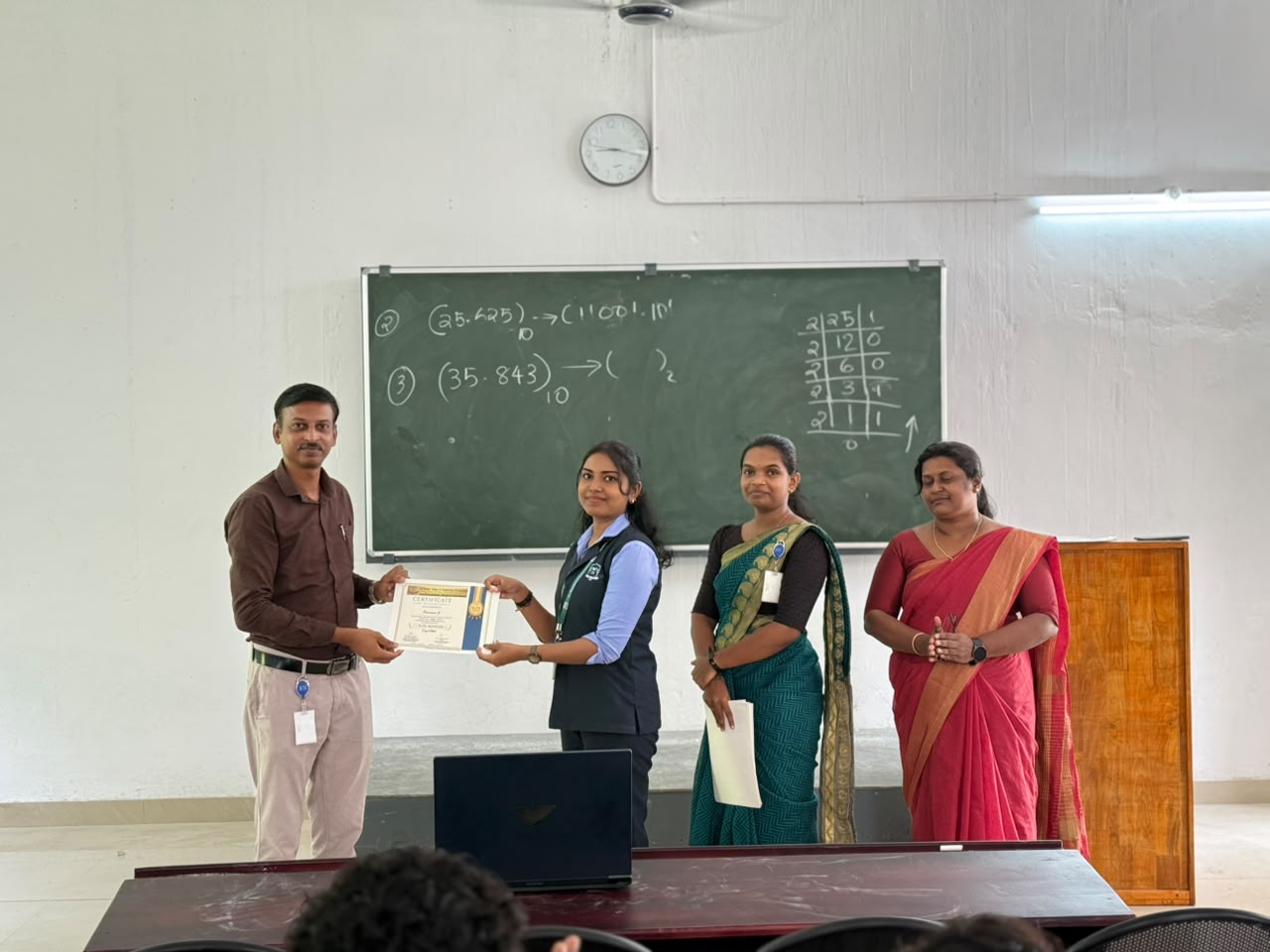
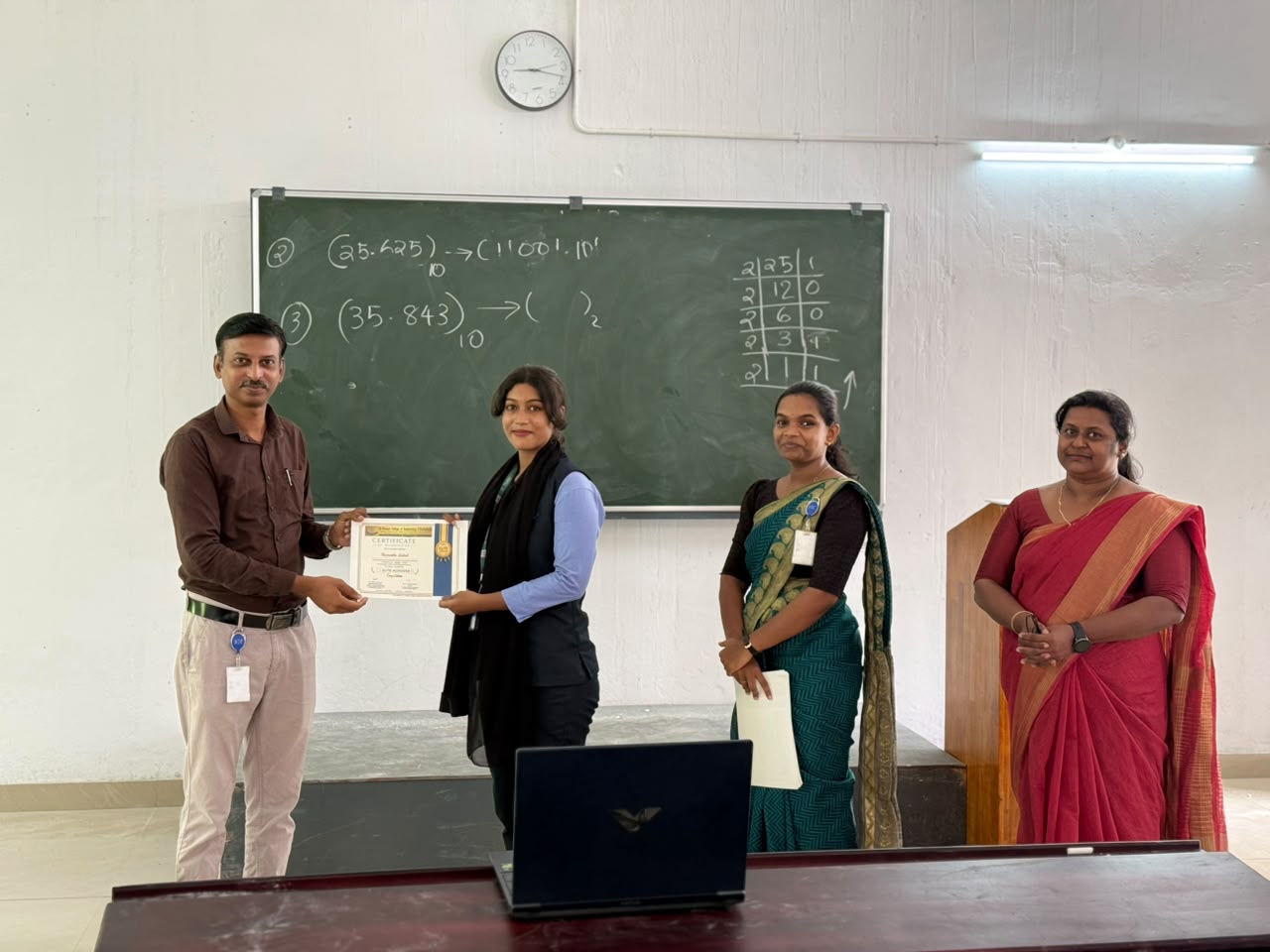
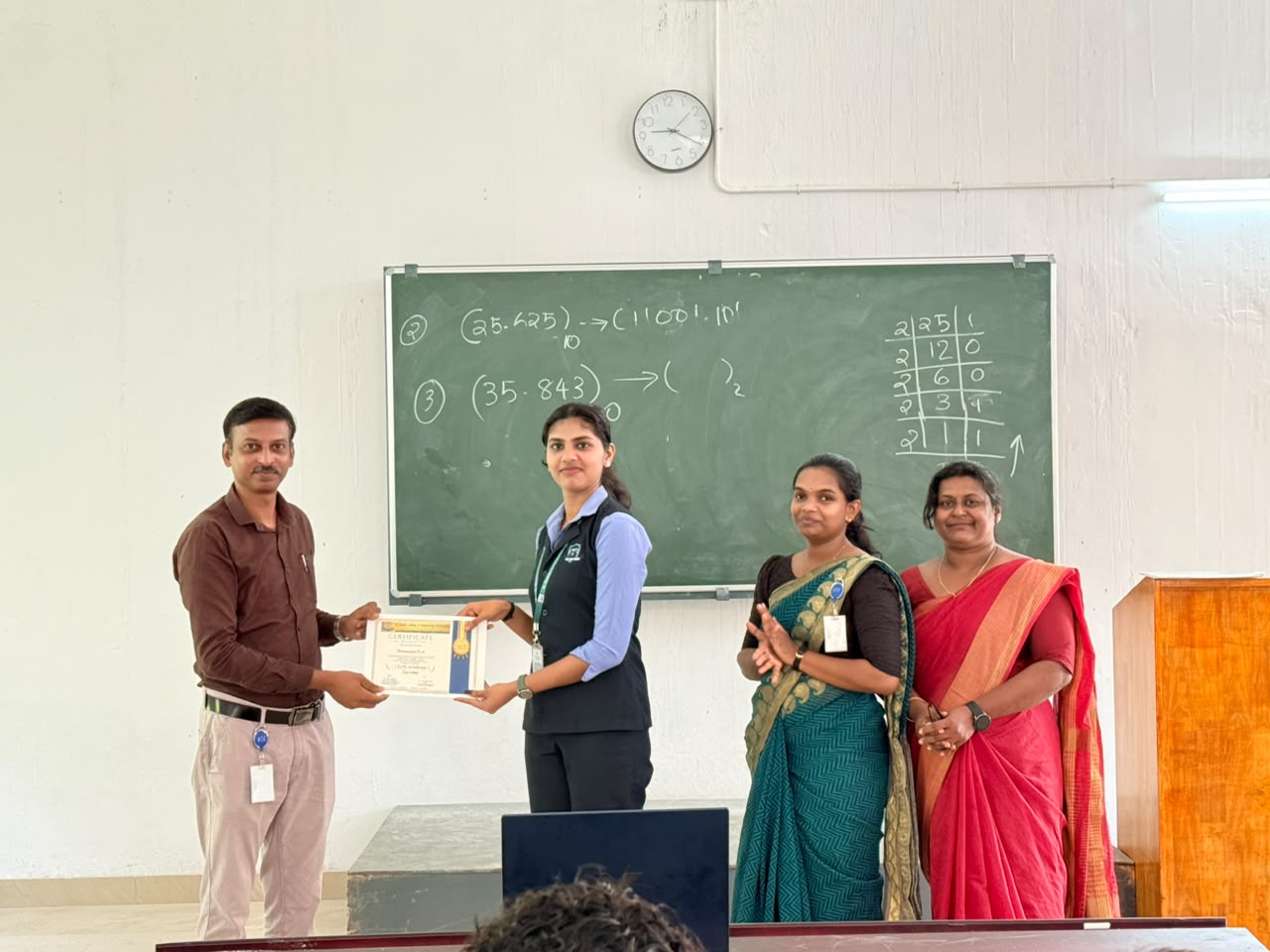
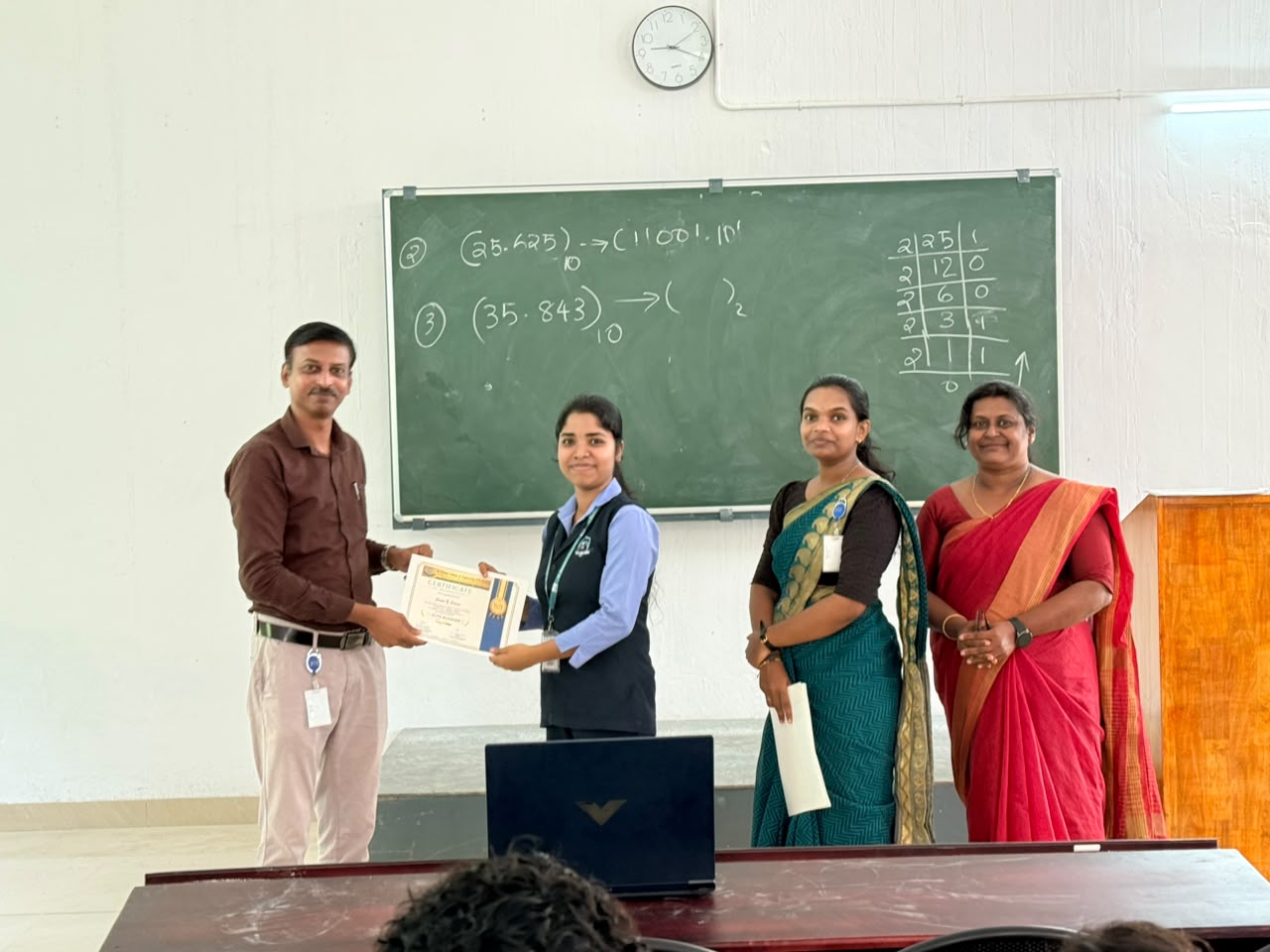
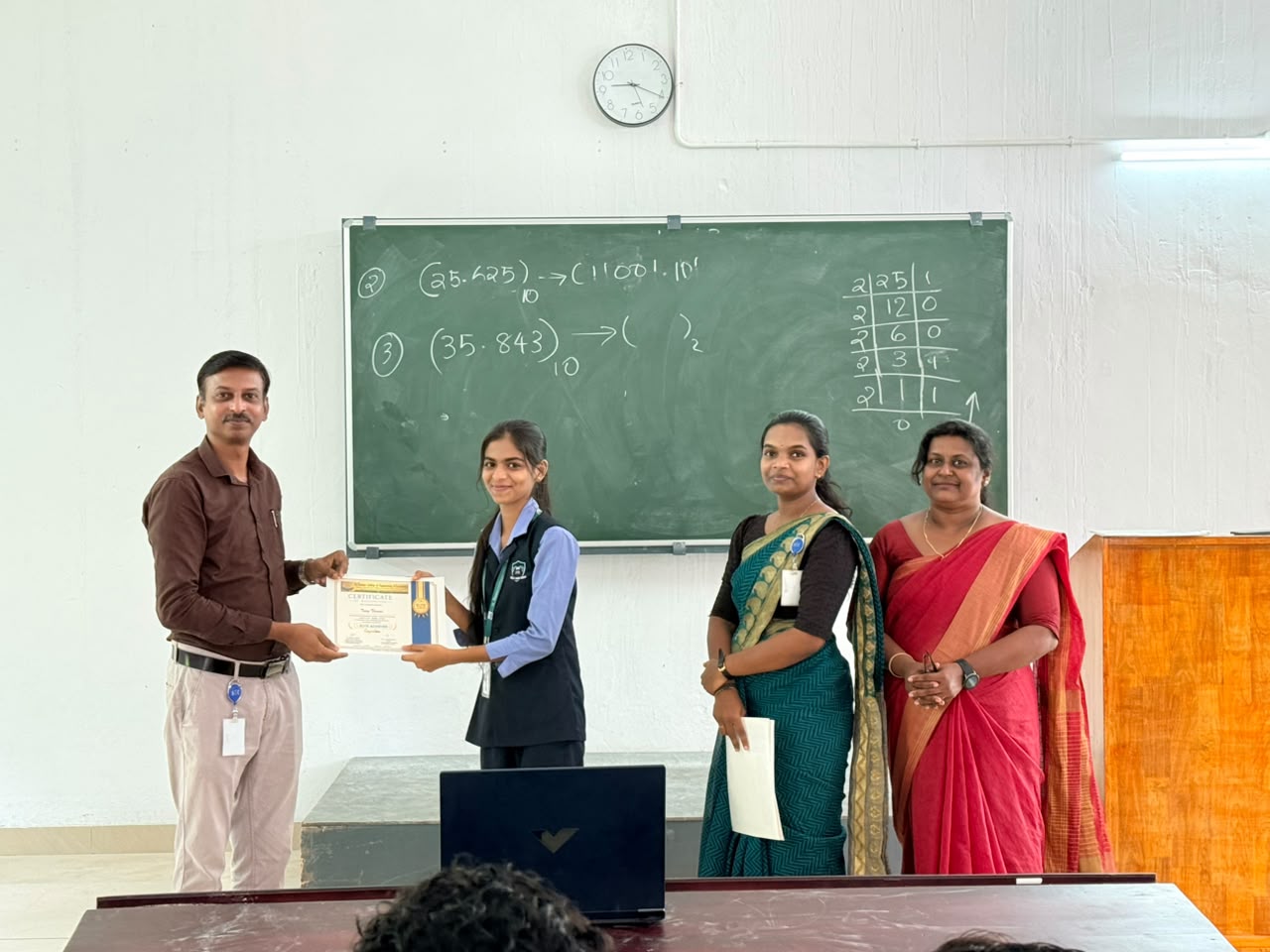
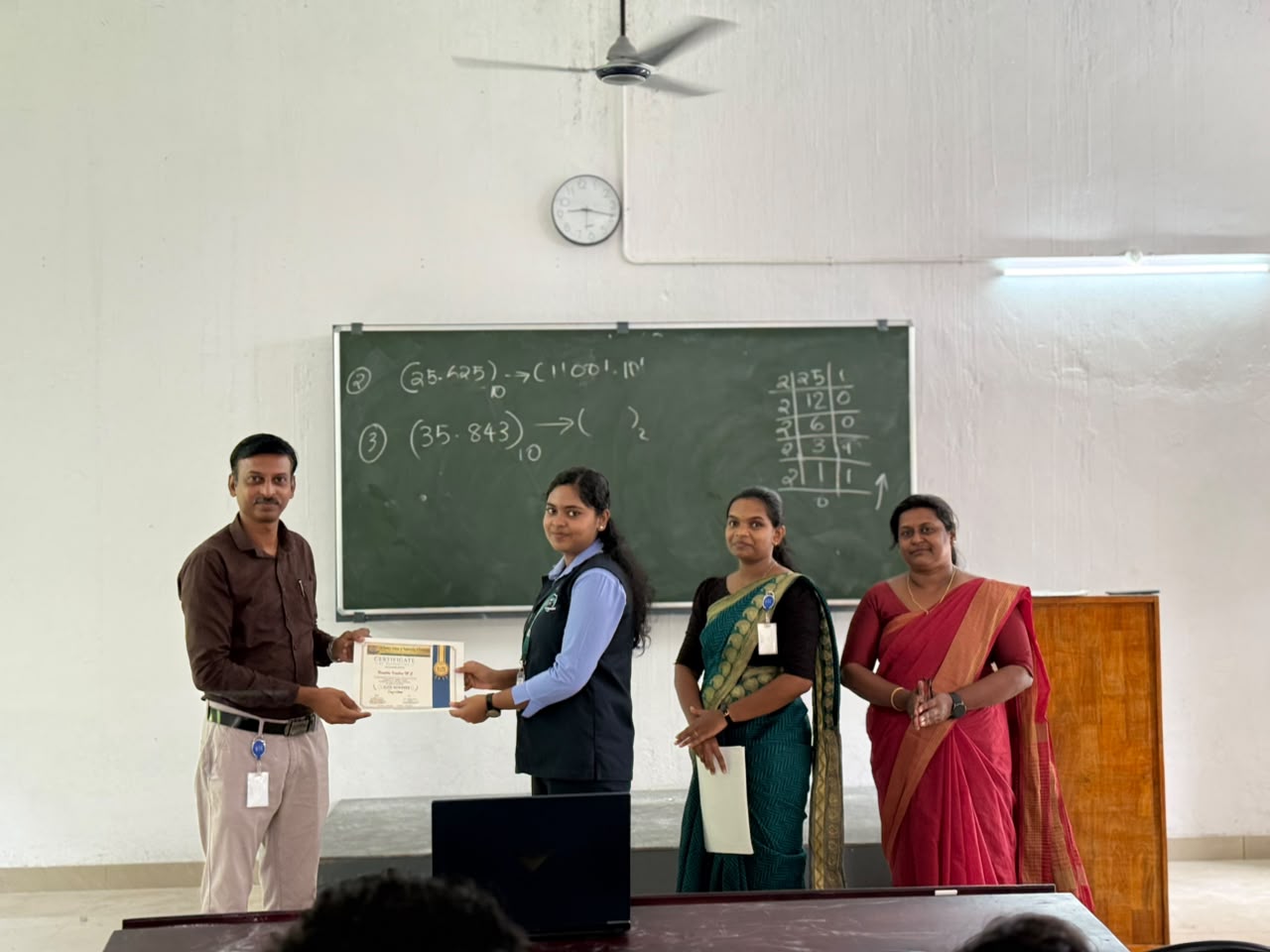
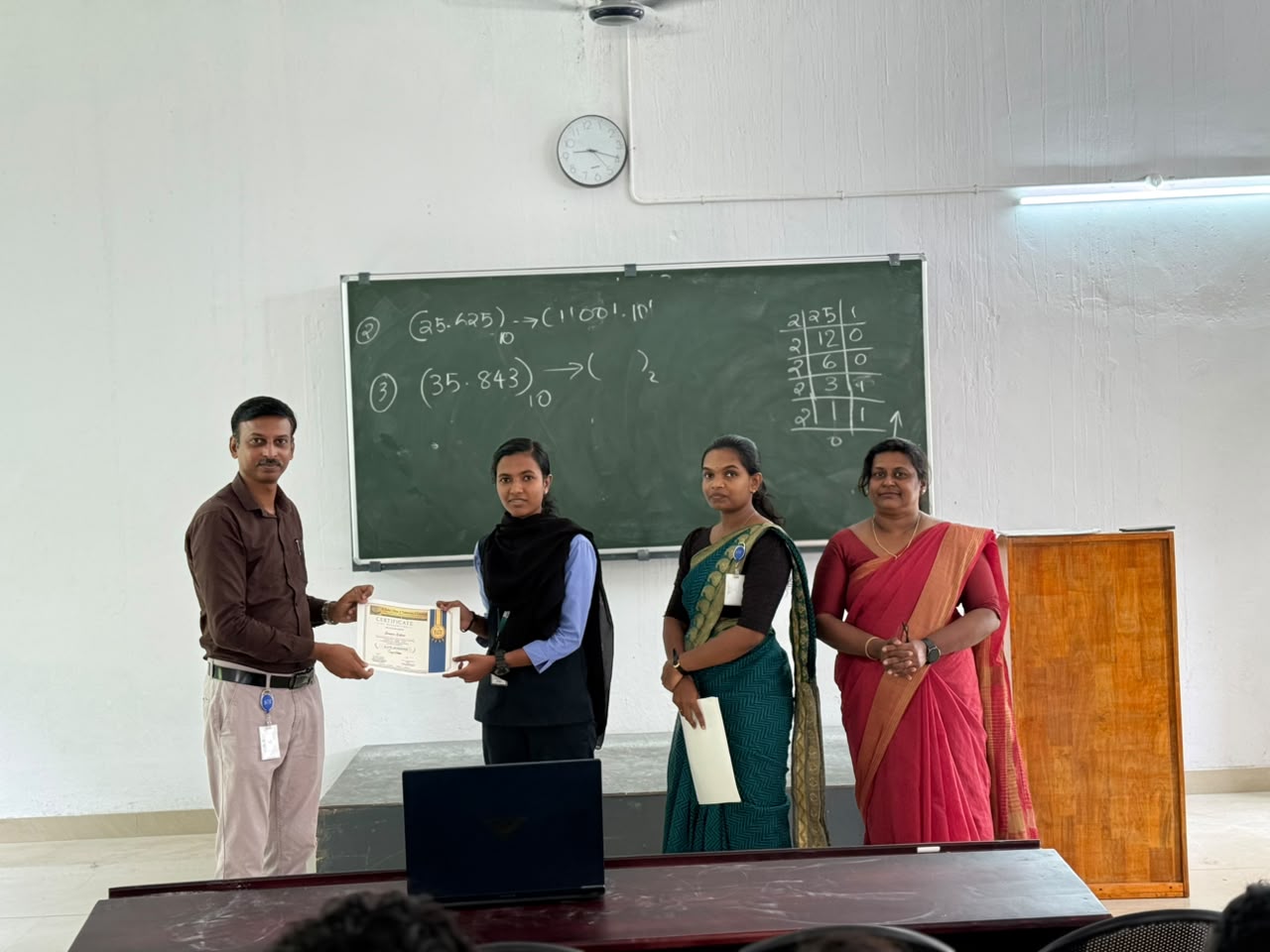
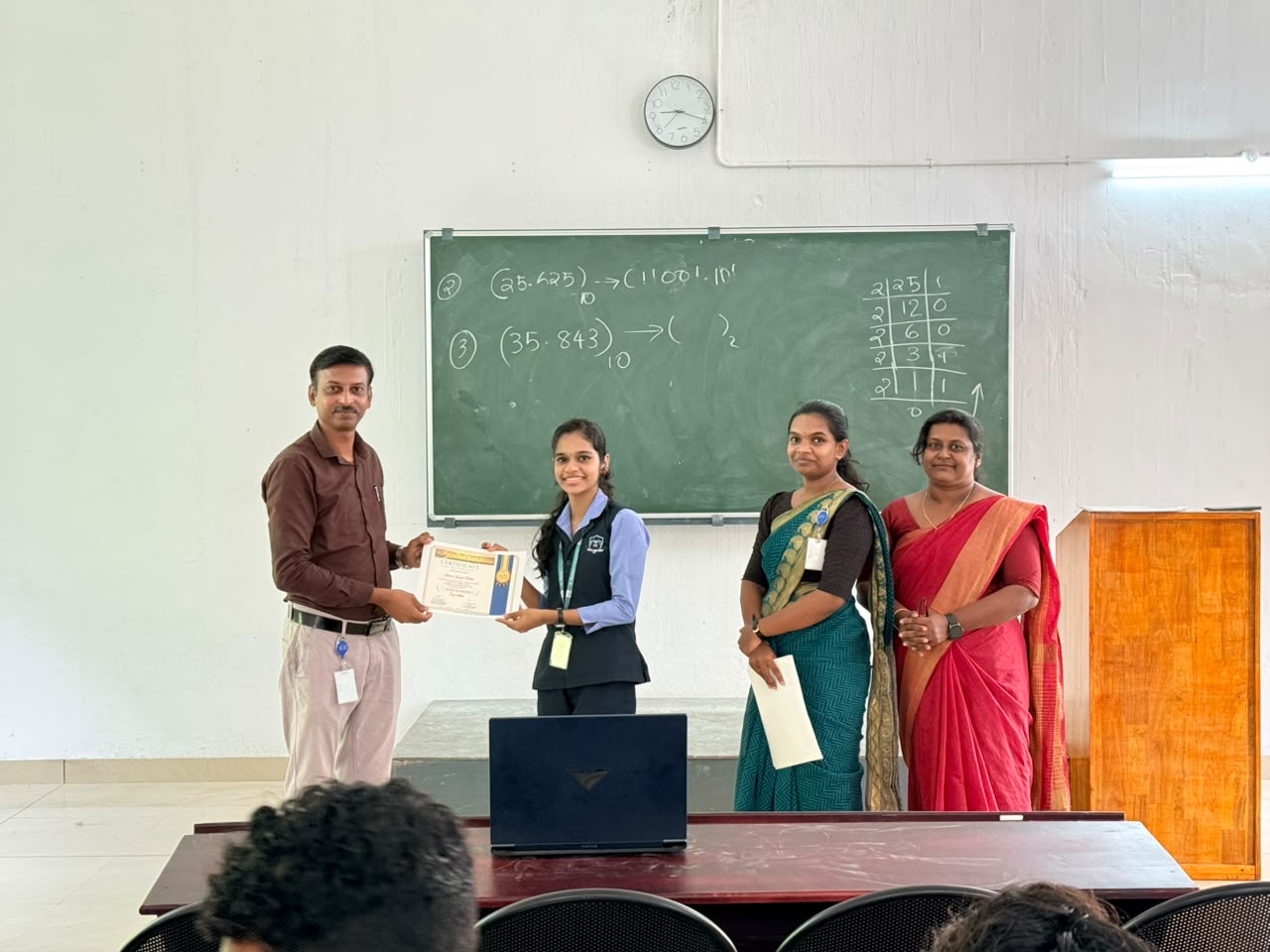
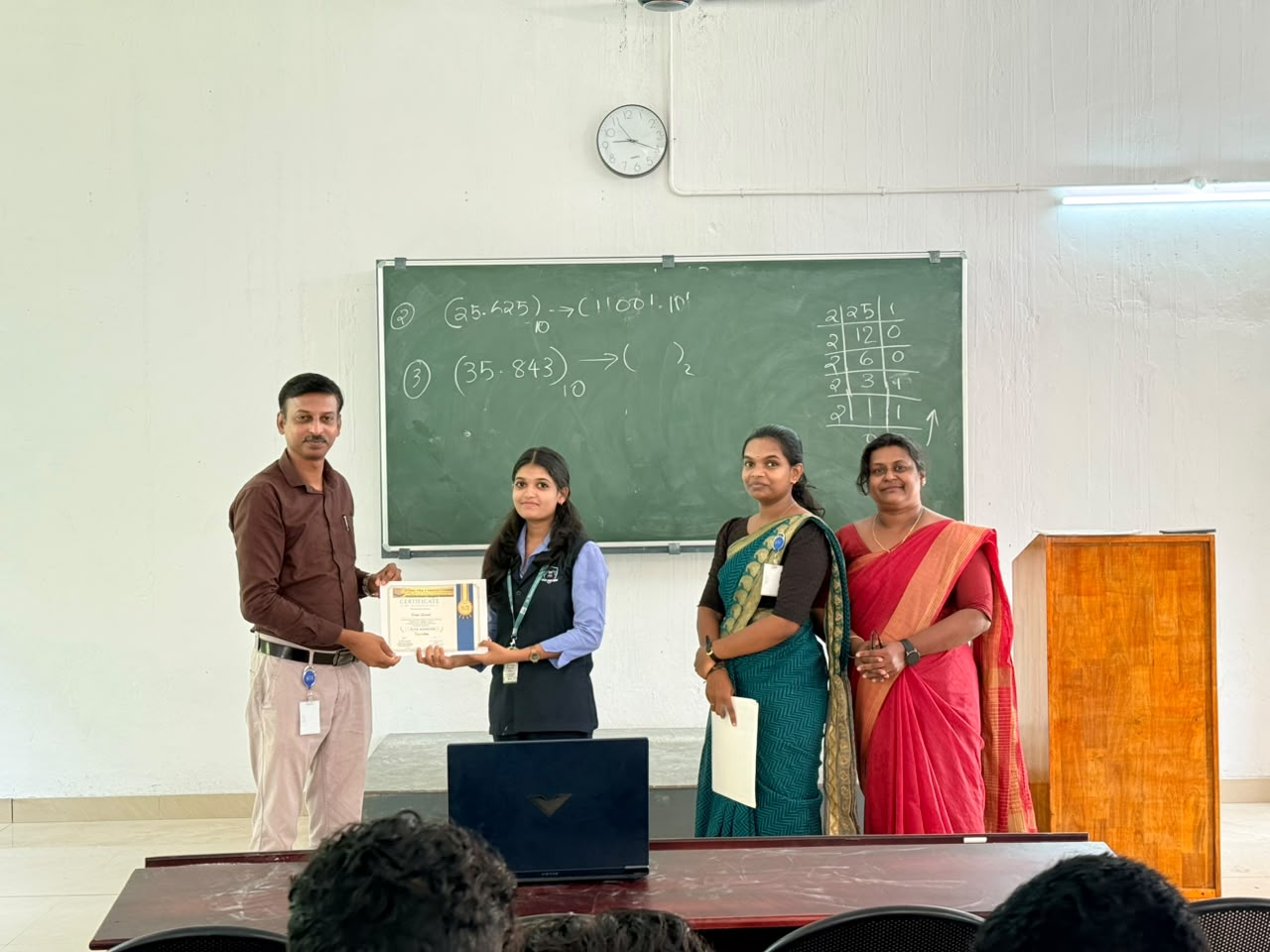
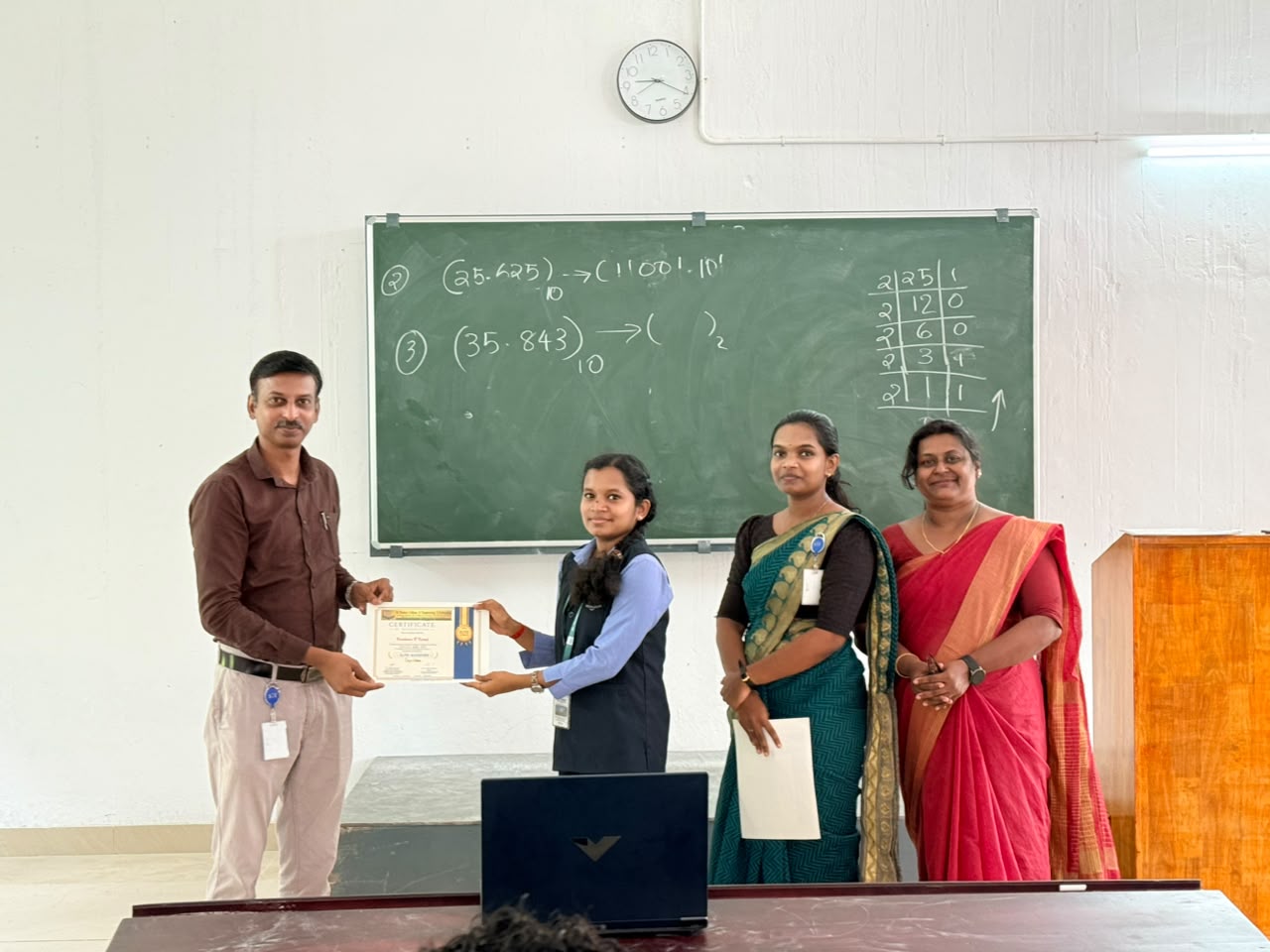
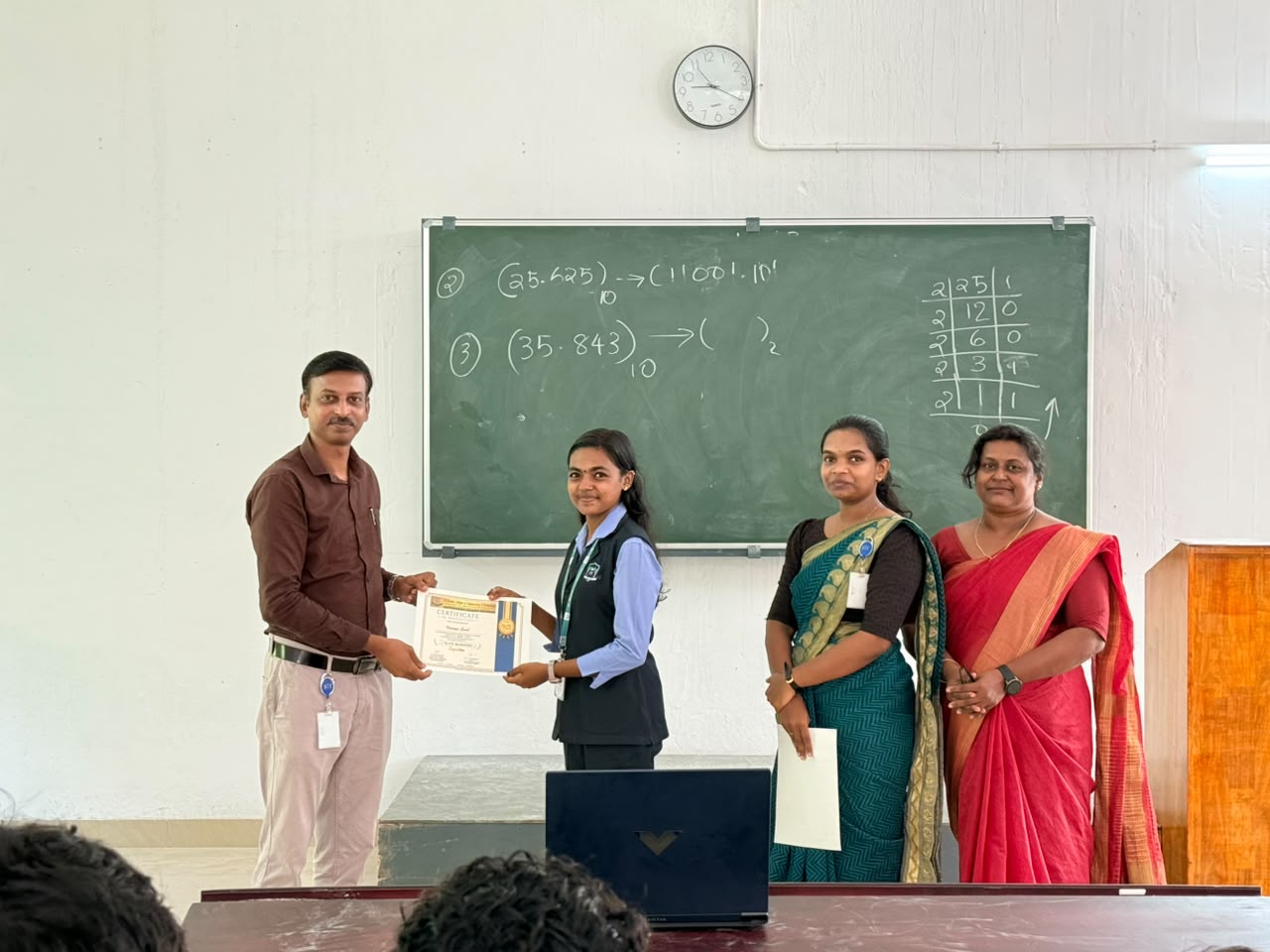
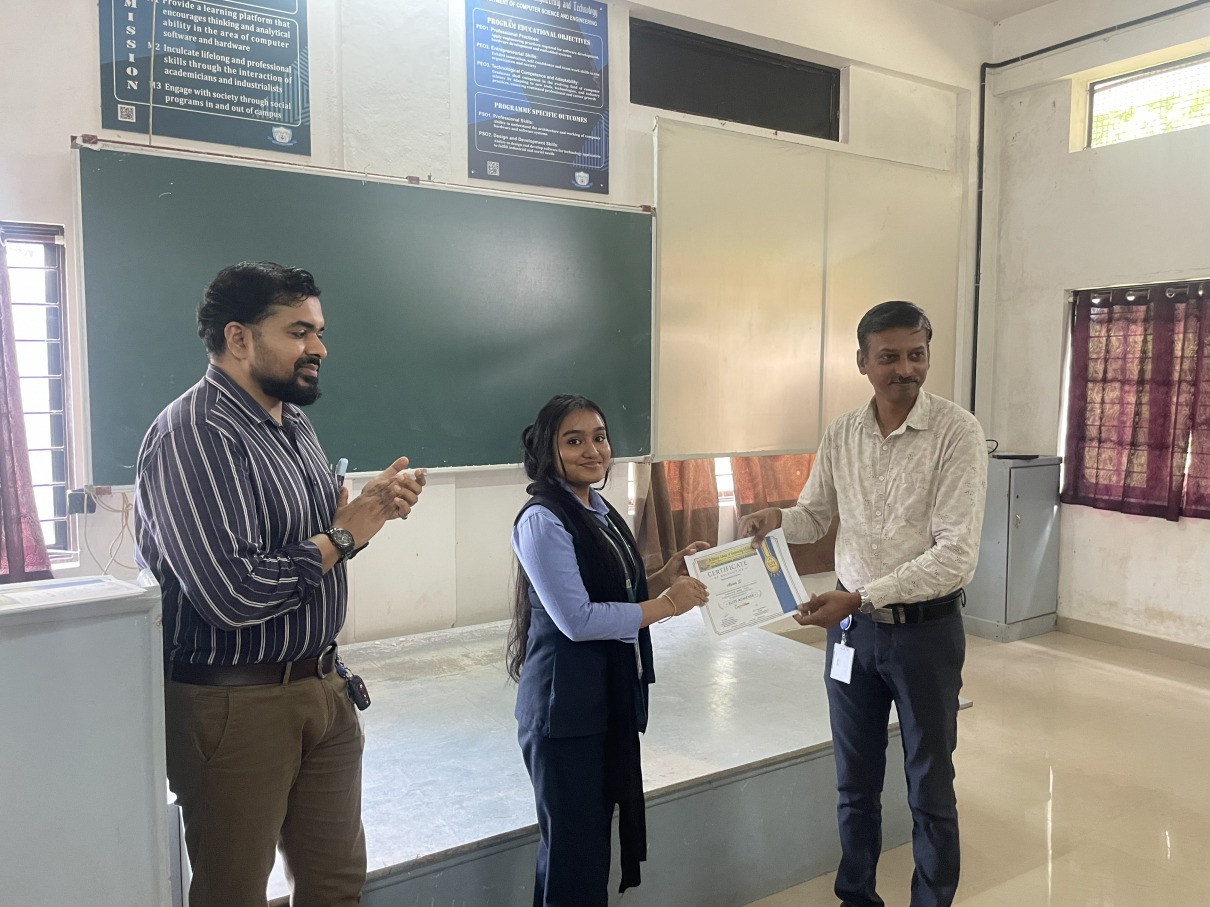
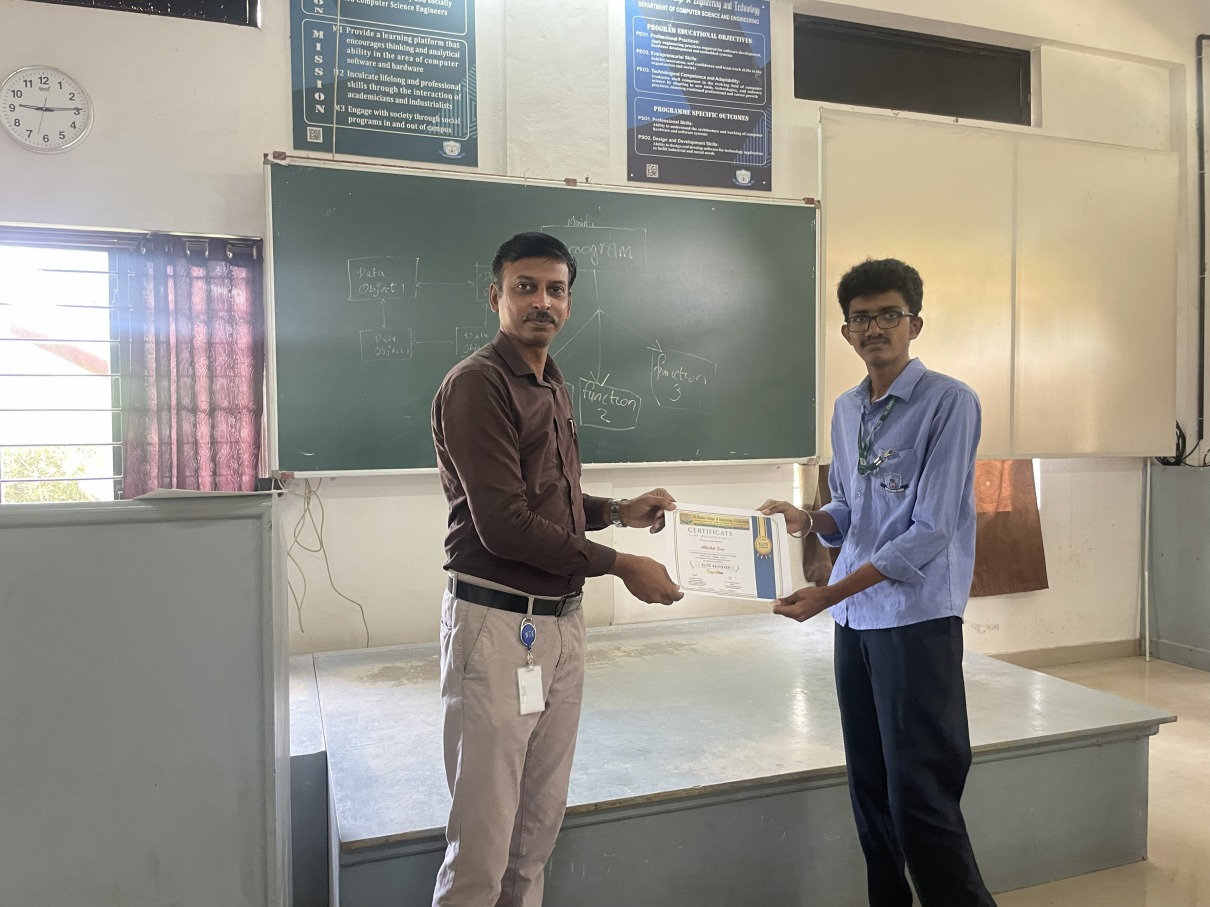
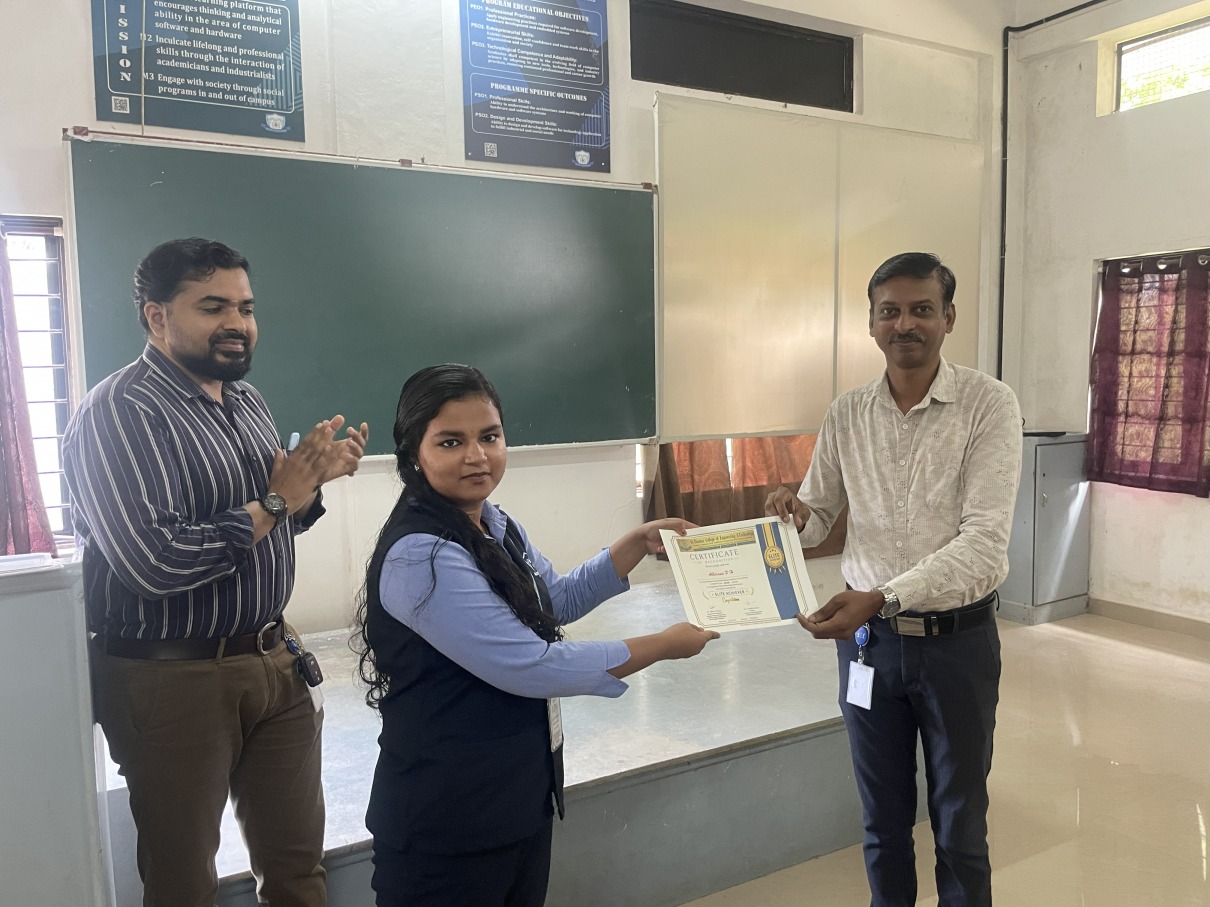
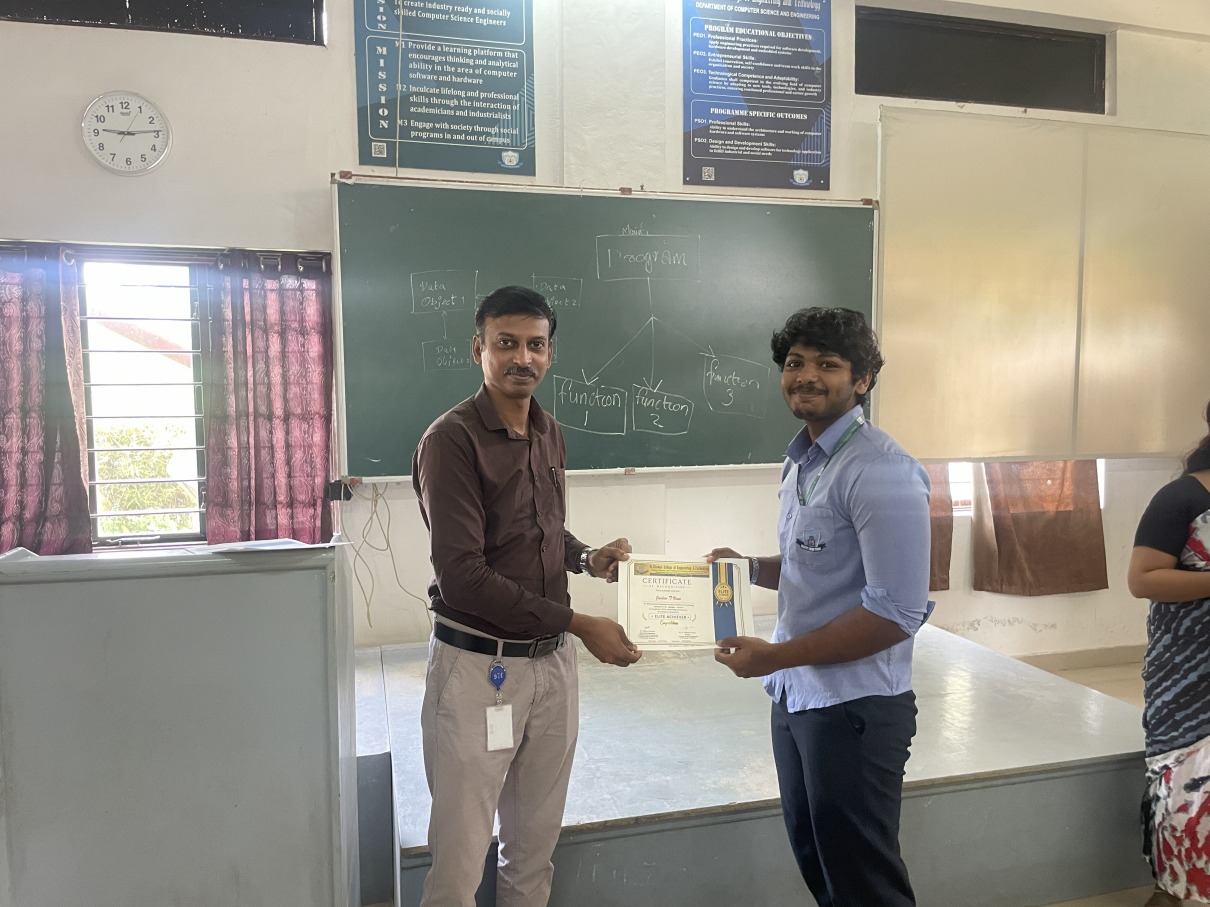
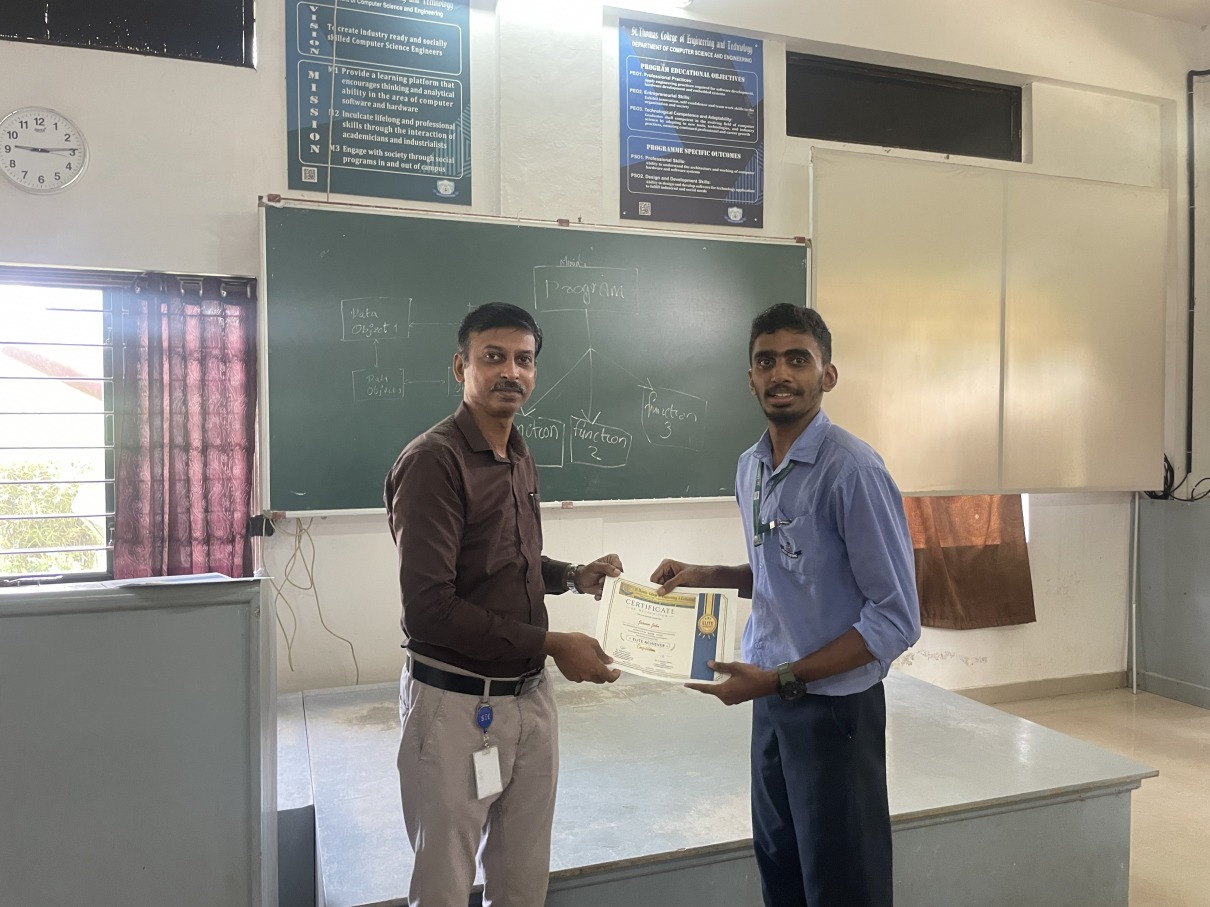
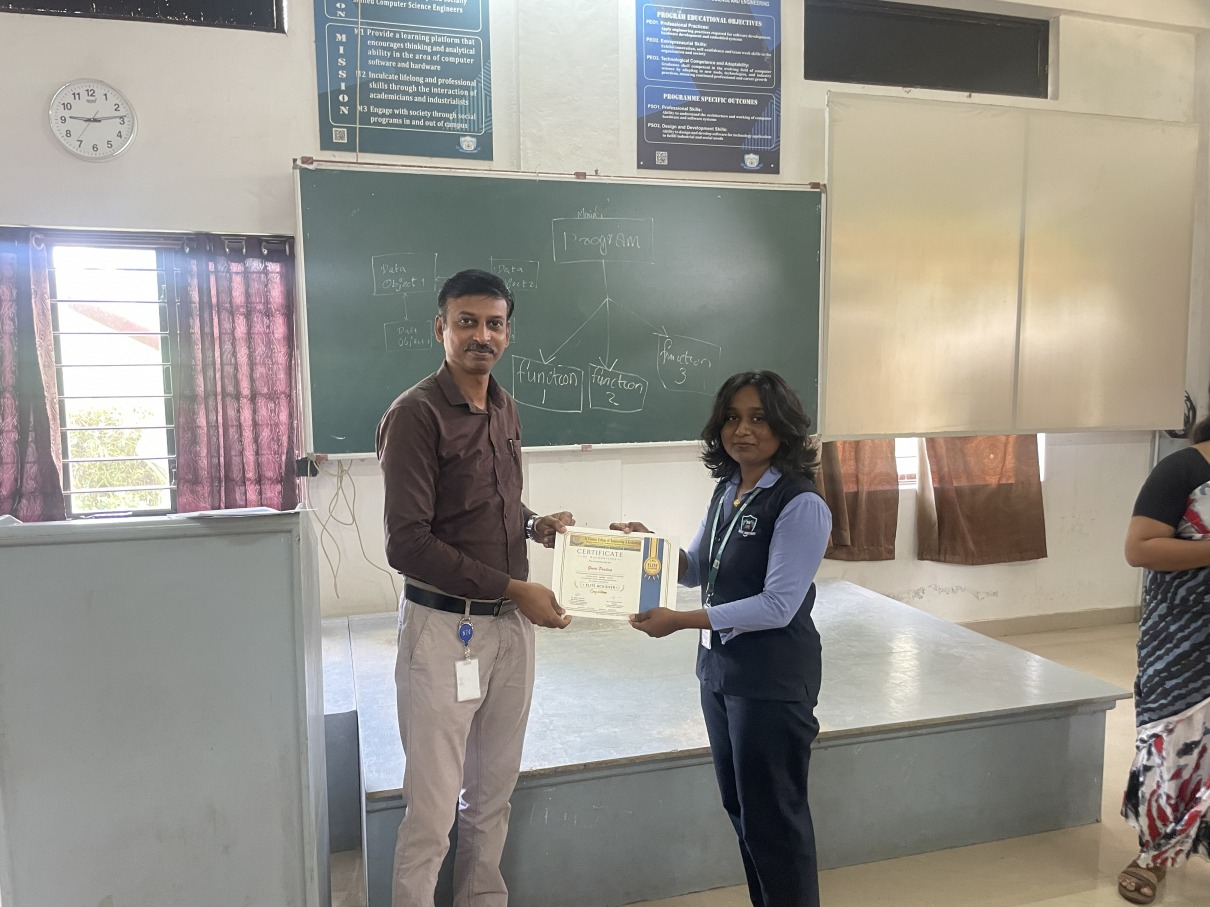
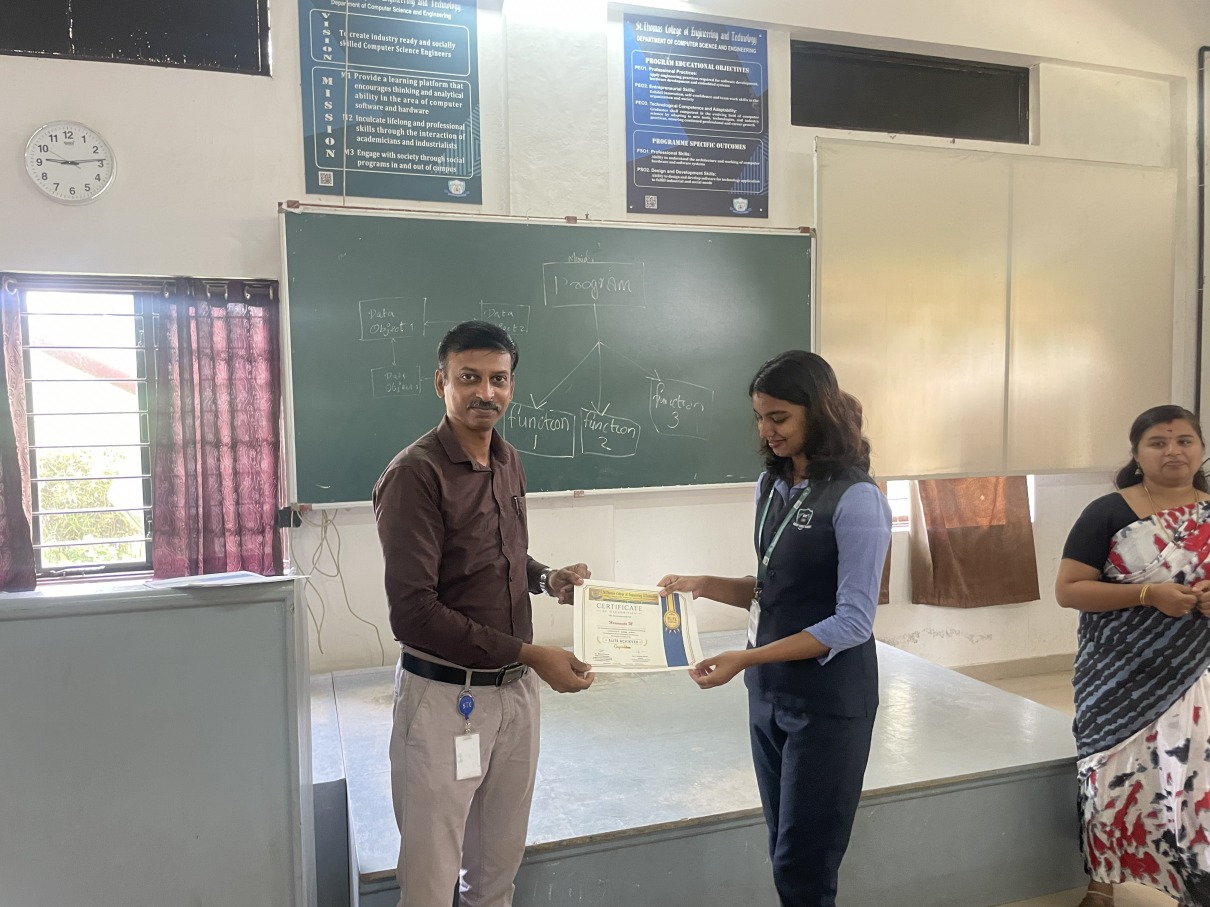
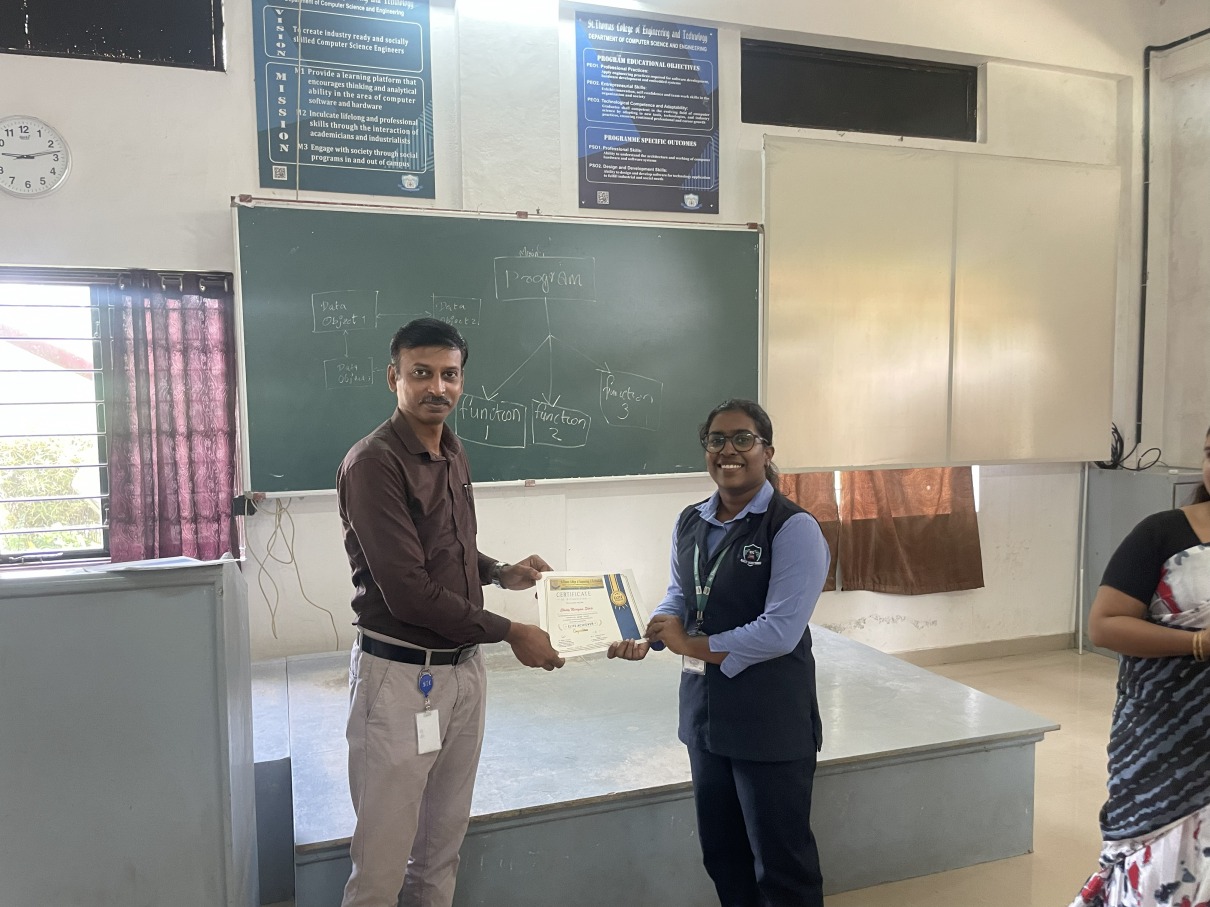
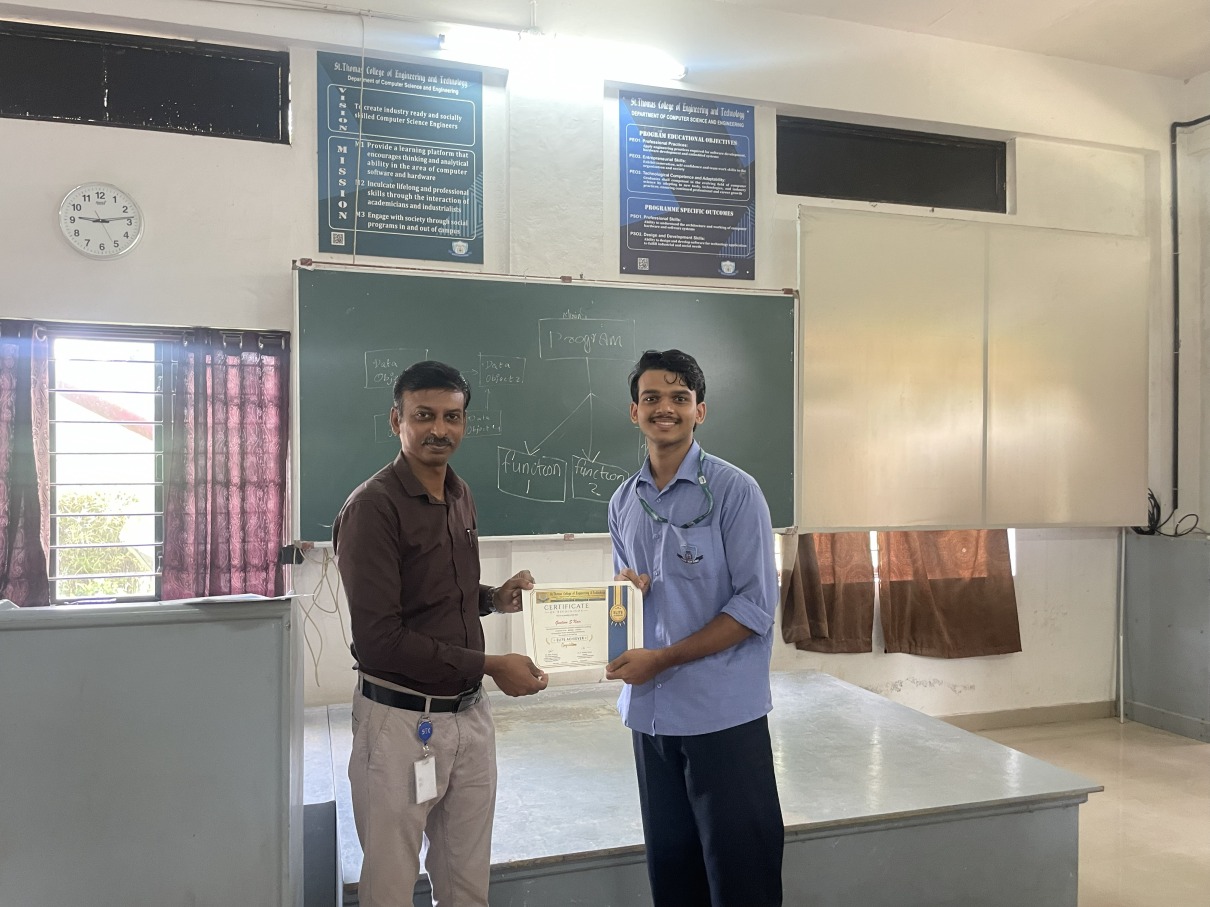
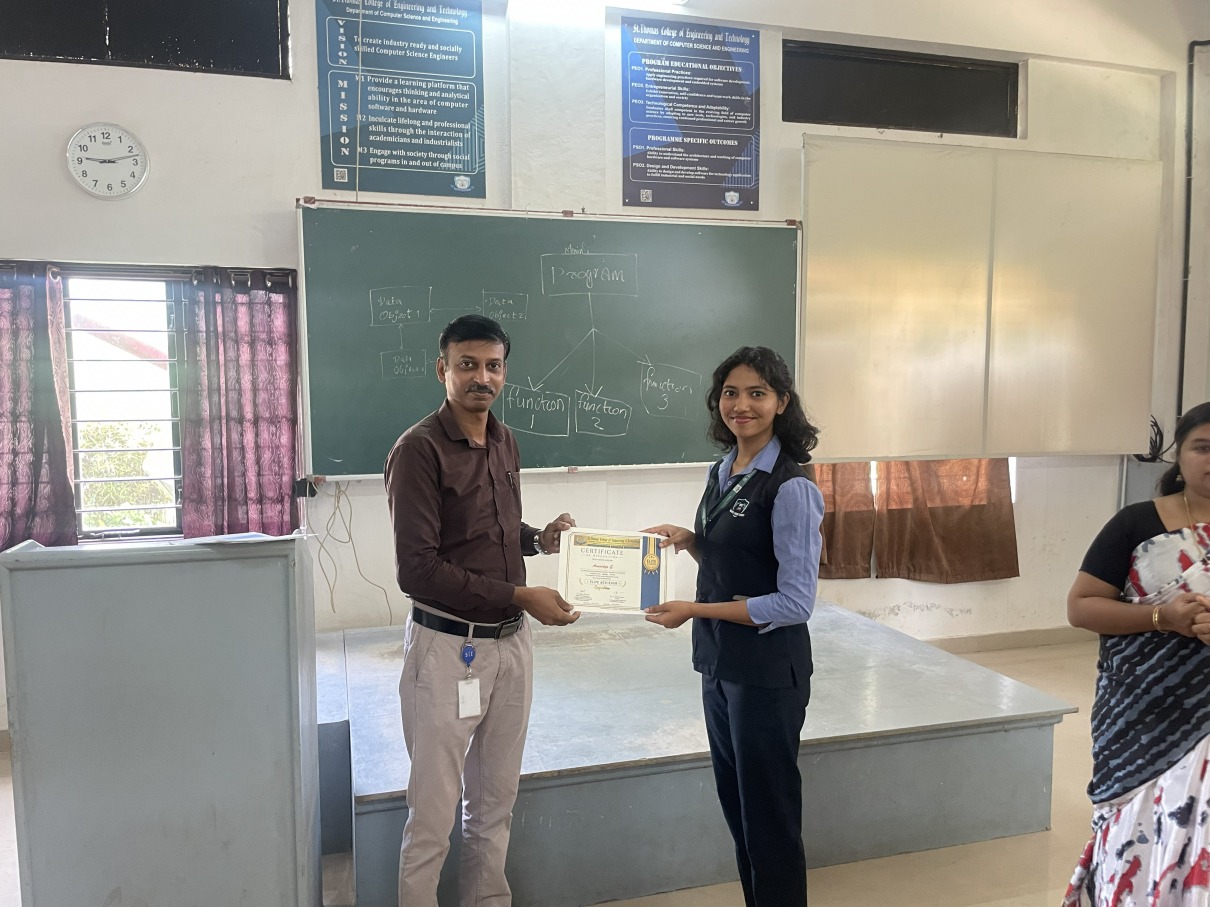
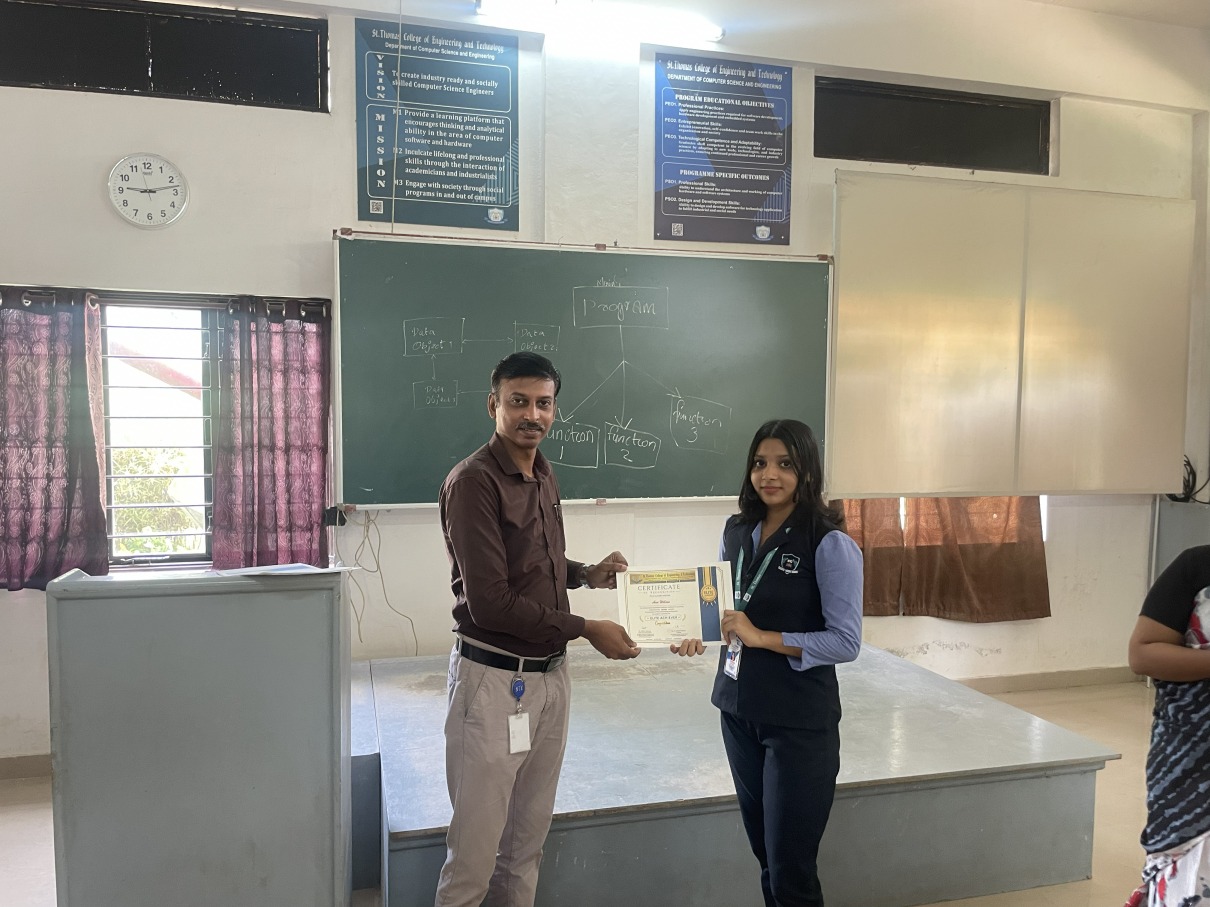
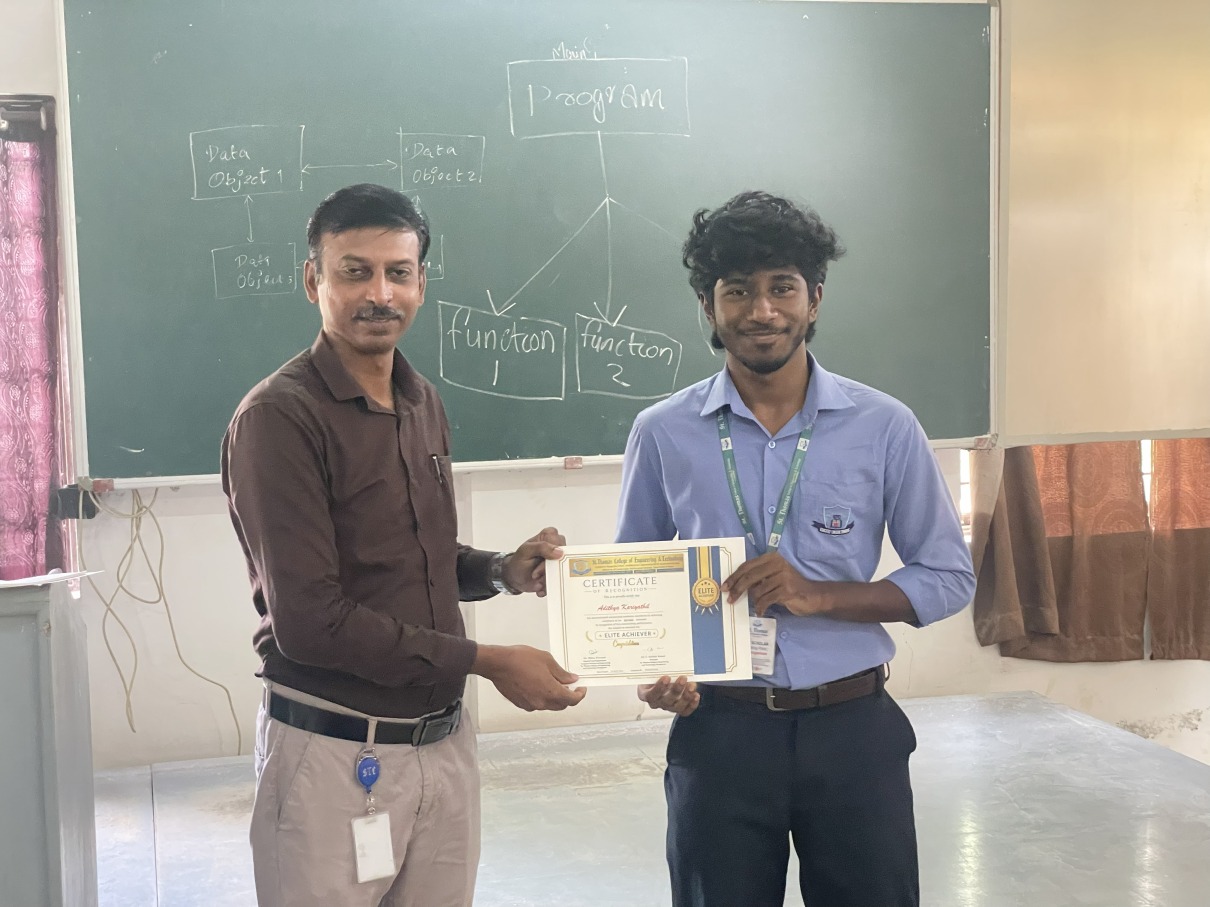
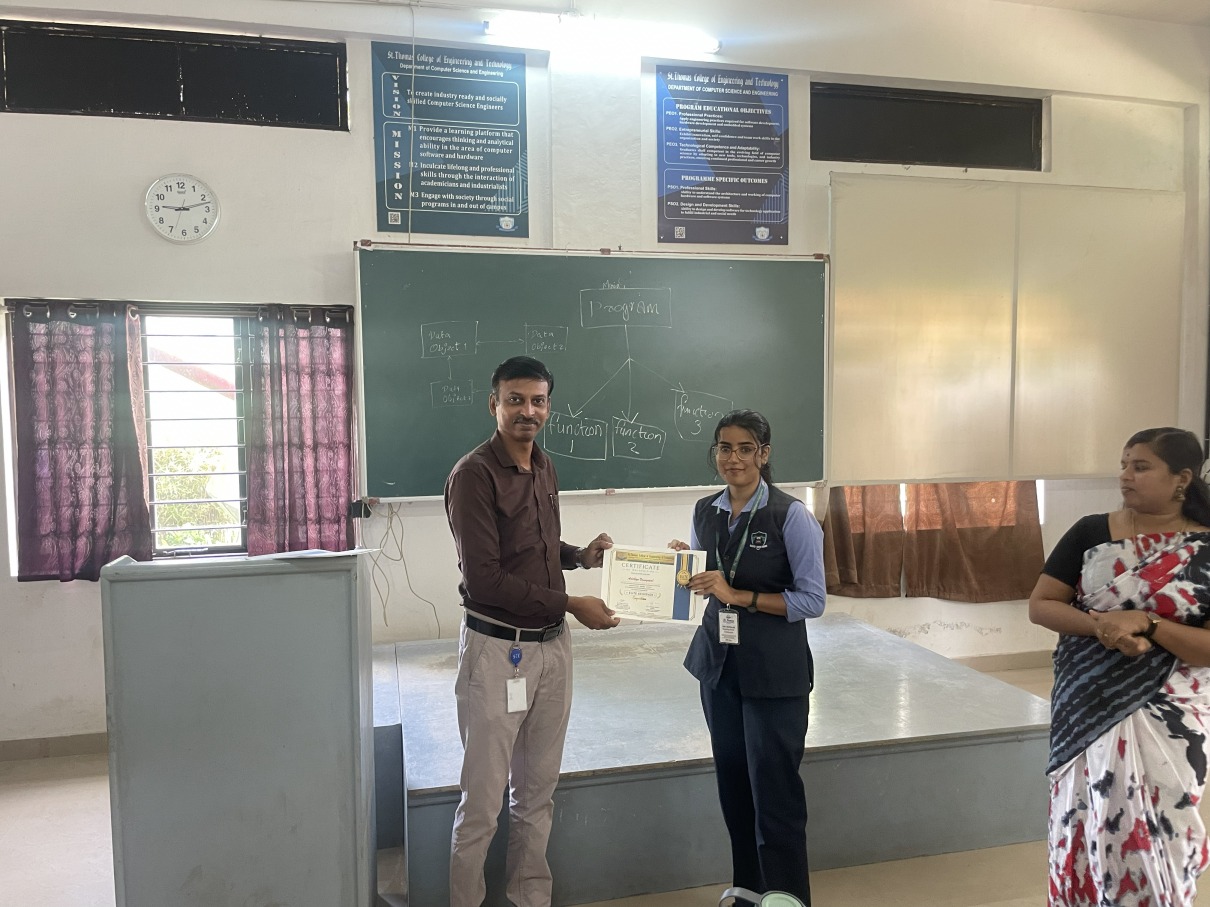
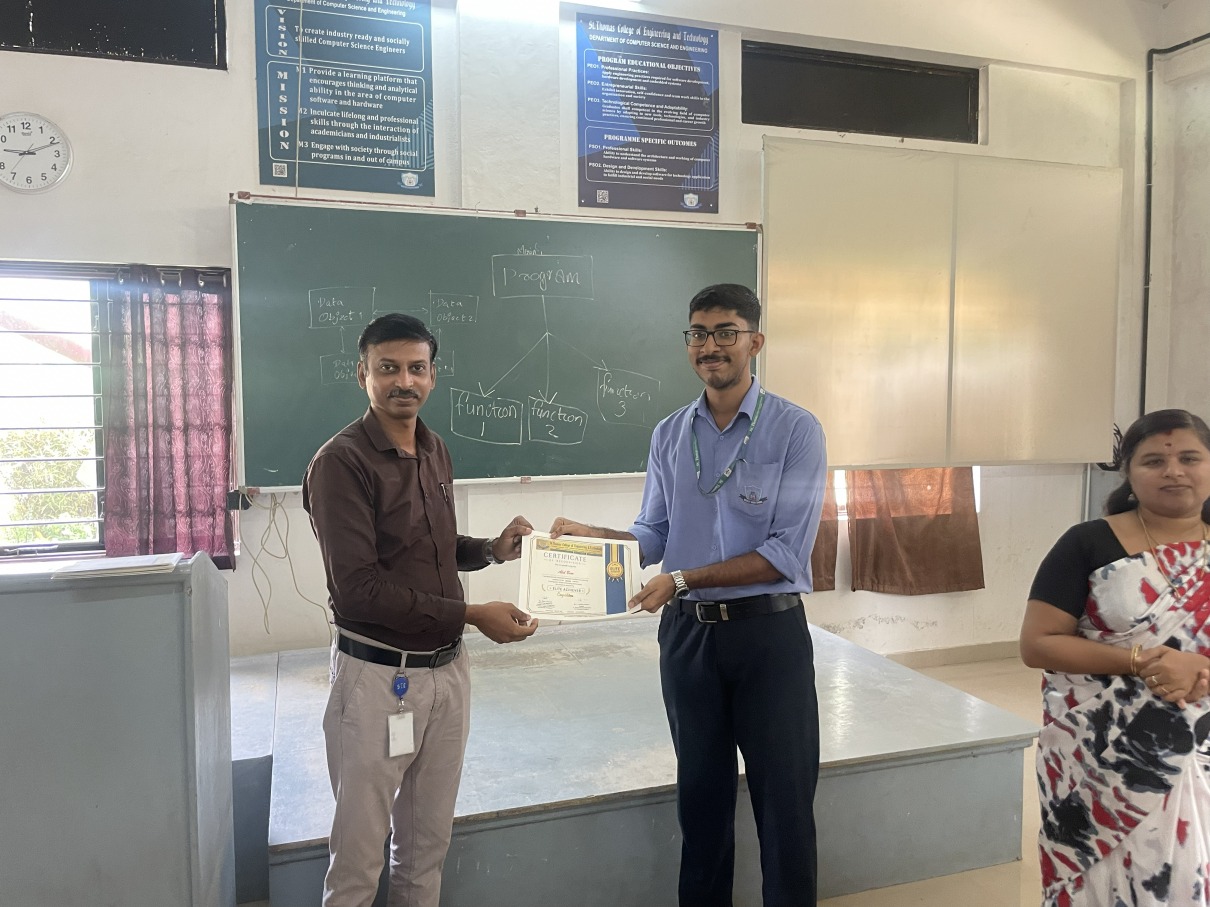
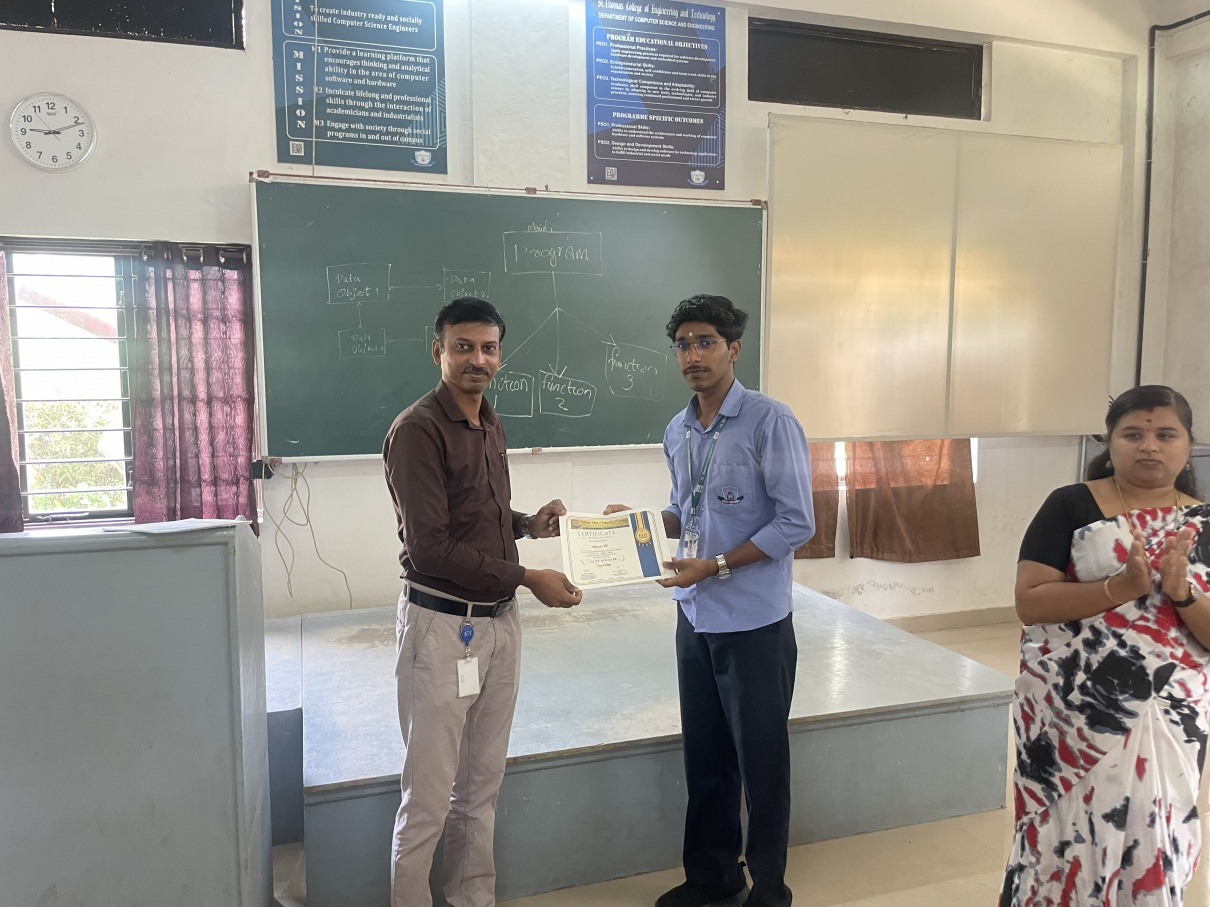
The Department of Computer Science and Engineering has finalized the academic results for the Semester 2 examinations for the 2025-2029 batch. Following the rigorous evaluation process, the department has identified the high-achieving students who have demonstrated exemplary performance across all core subjects. These top-performing individuals have distinguished themselves through their dedication to their studies and their grasp of foundational engineering concepts. This recognition is intended to encourage academic persistence and excellence as students progress into higher semesters. The department continues to monitor and support such academic accomplishments to ensure all students reach their full potential.
Key Takeaway
Recognition of high-achieving students in the Semester 2 examinations for the 2025-29 batch.
09 S3 Toppers (2024-2028 Batch)
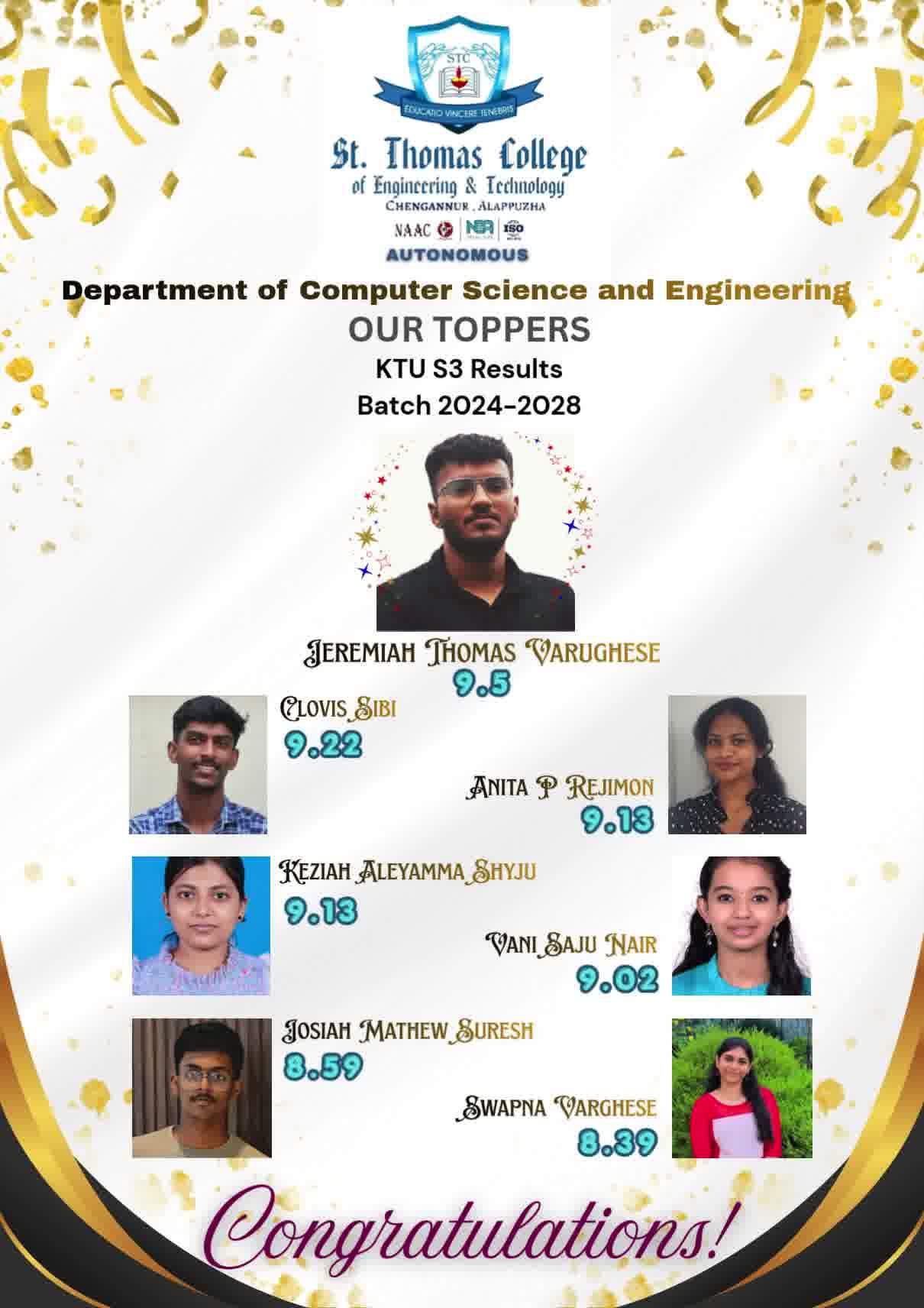
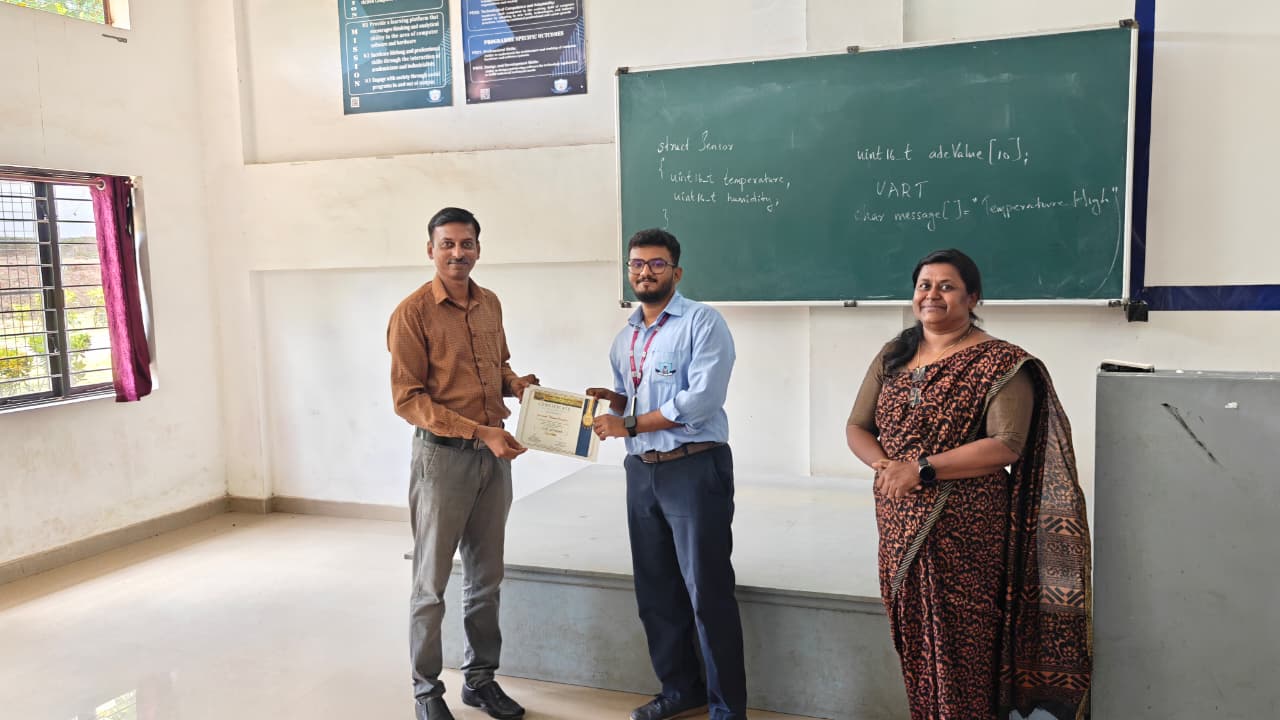
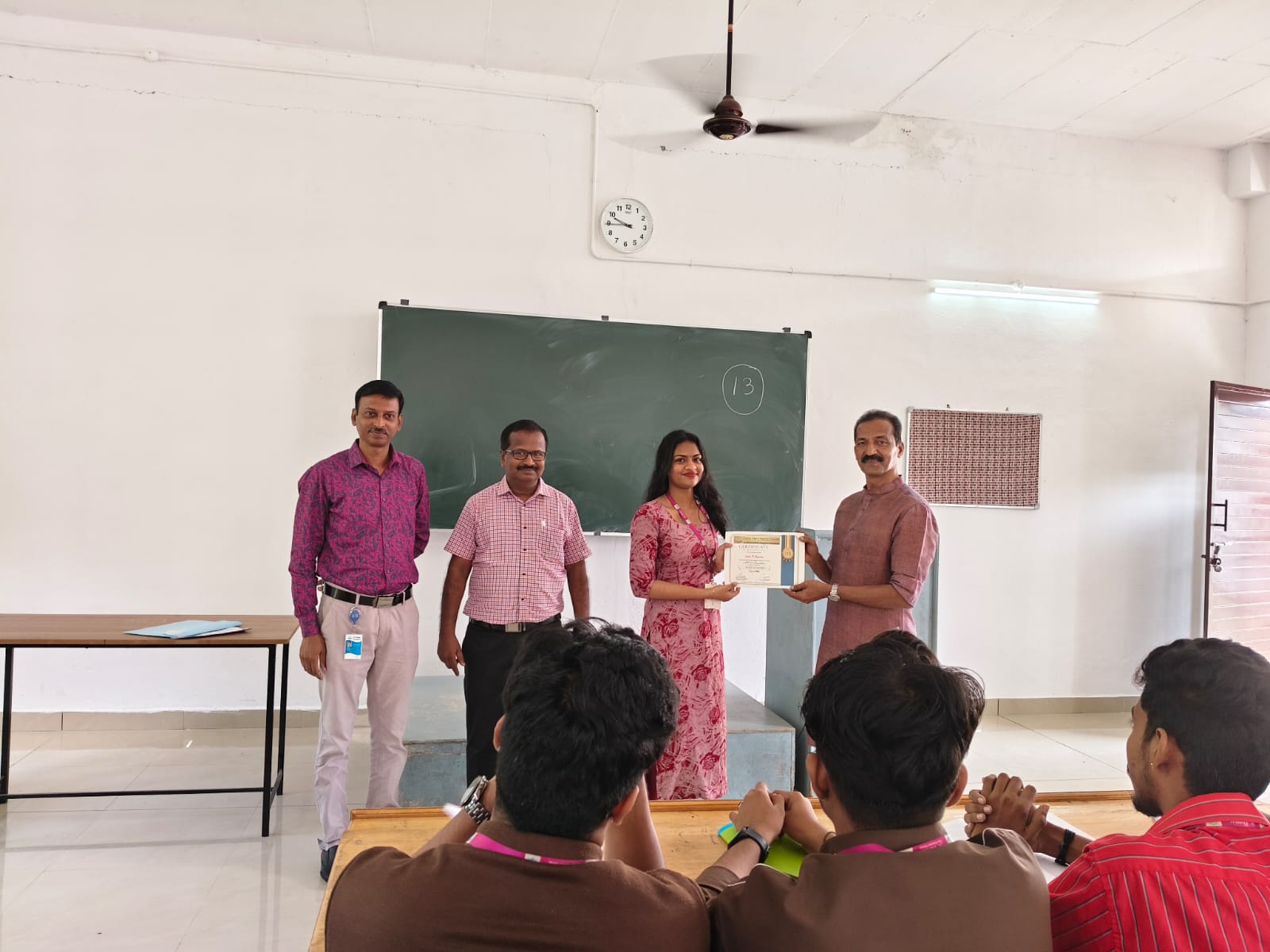
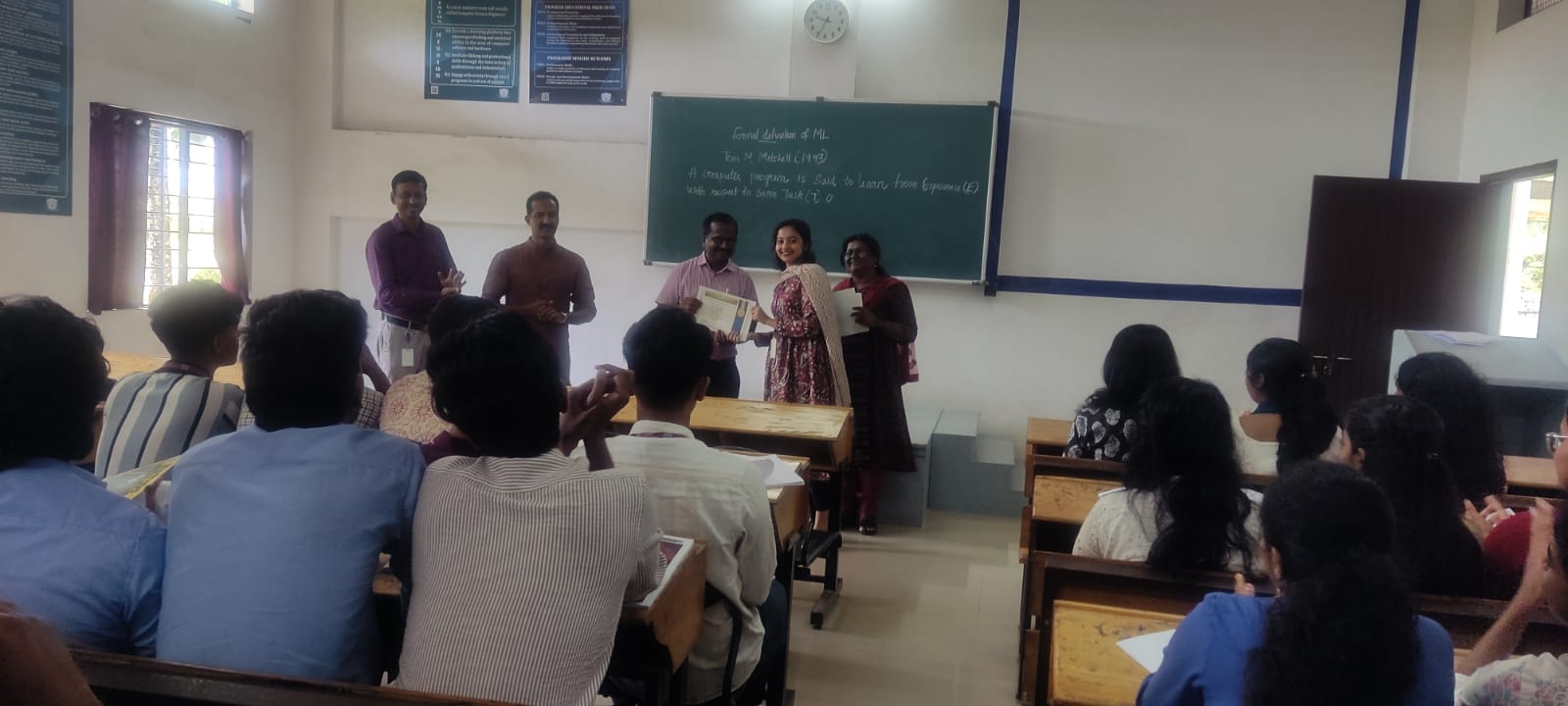
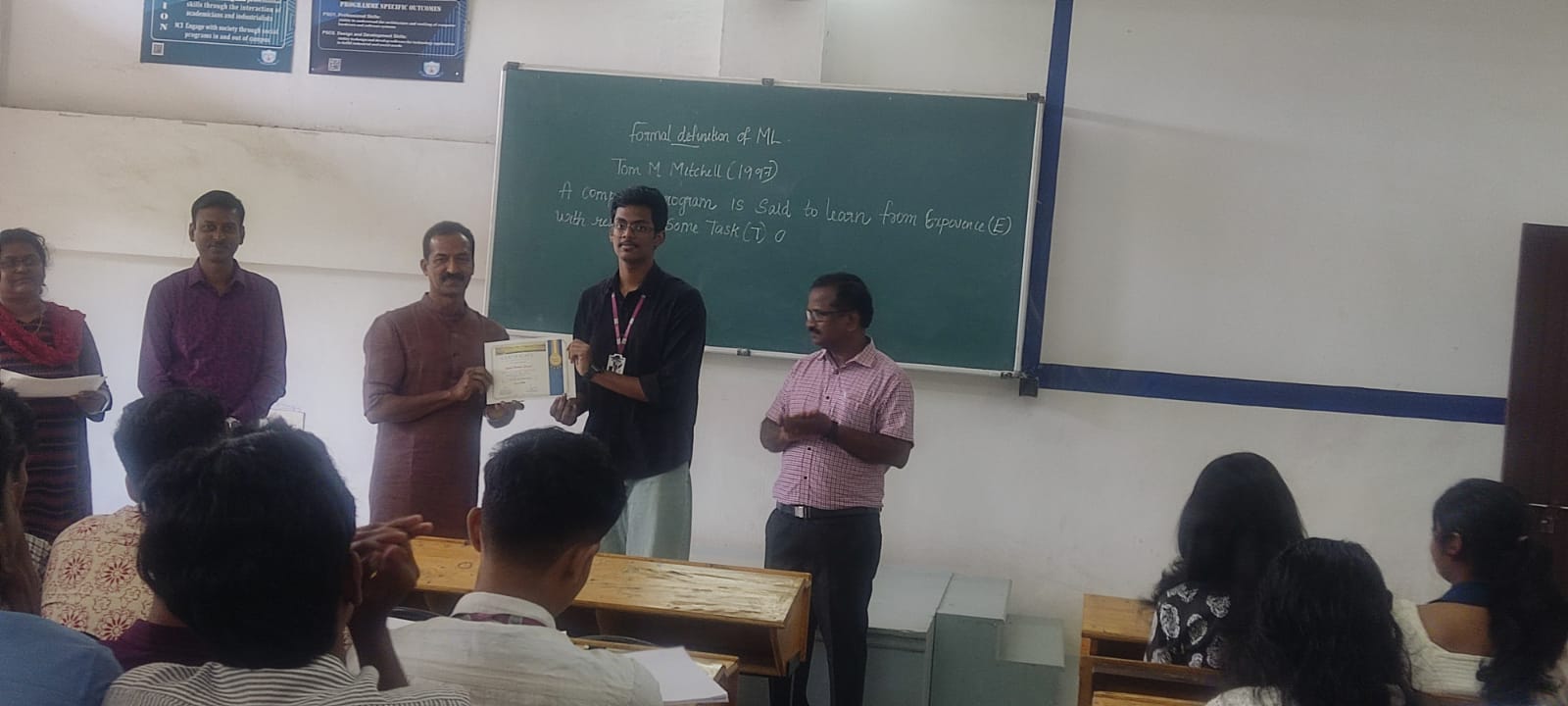
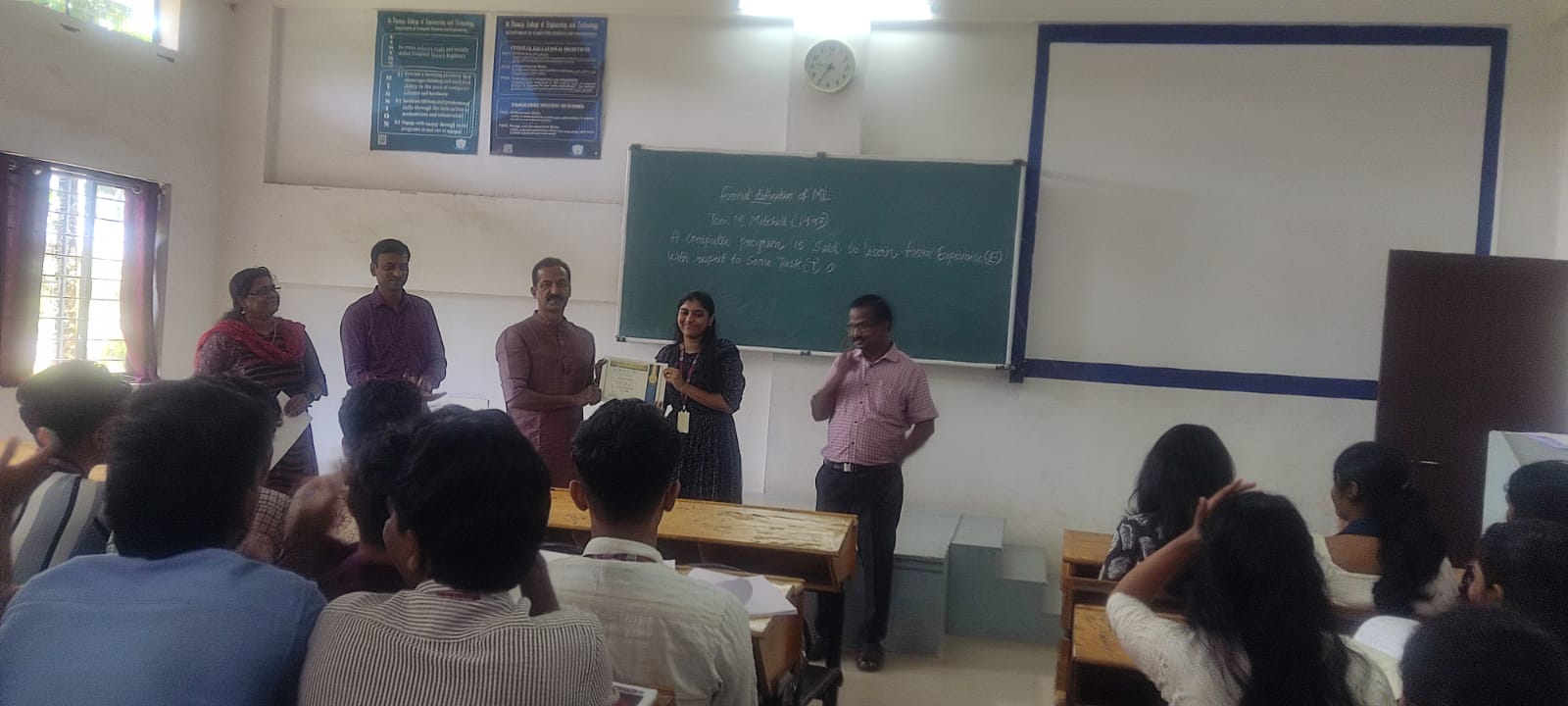
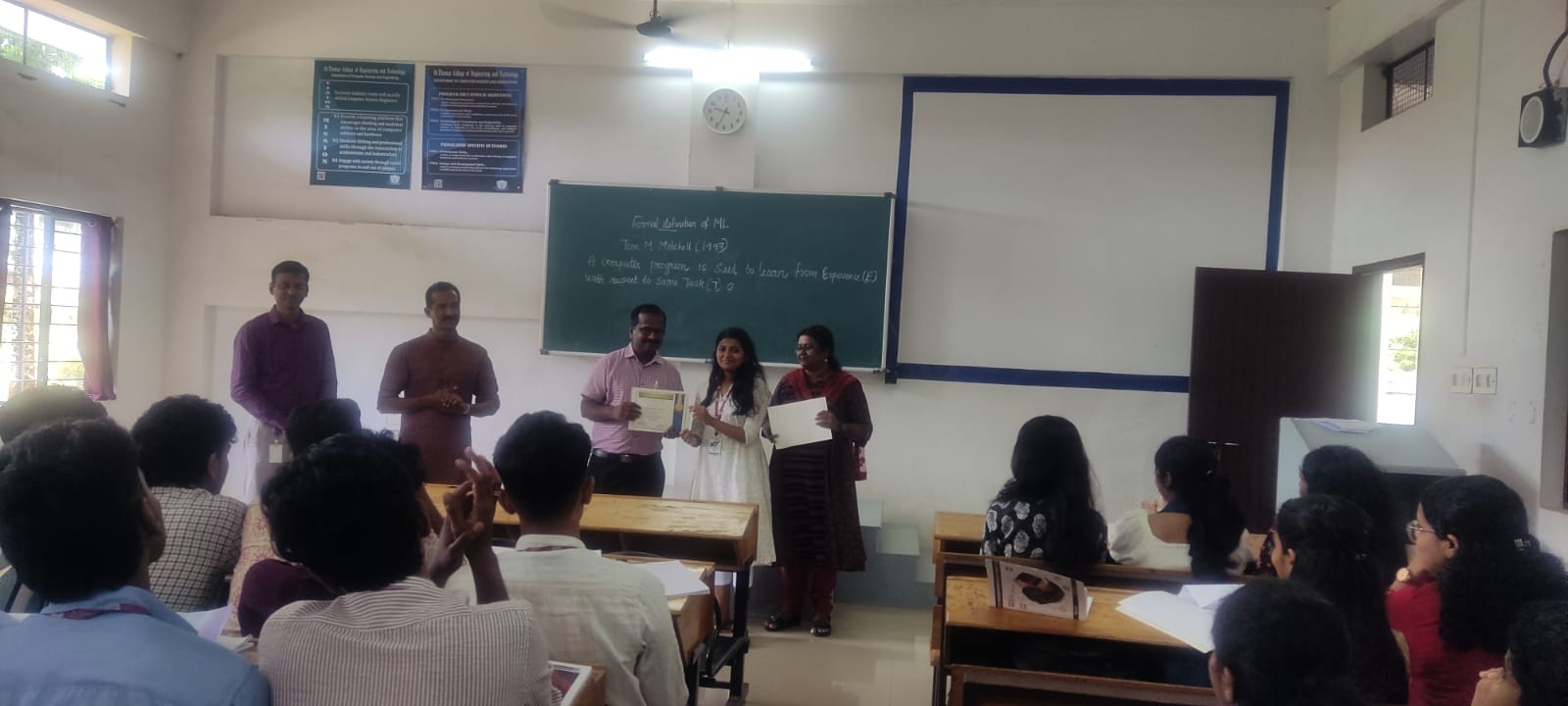
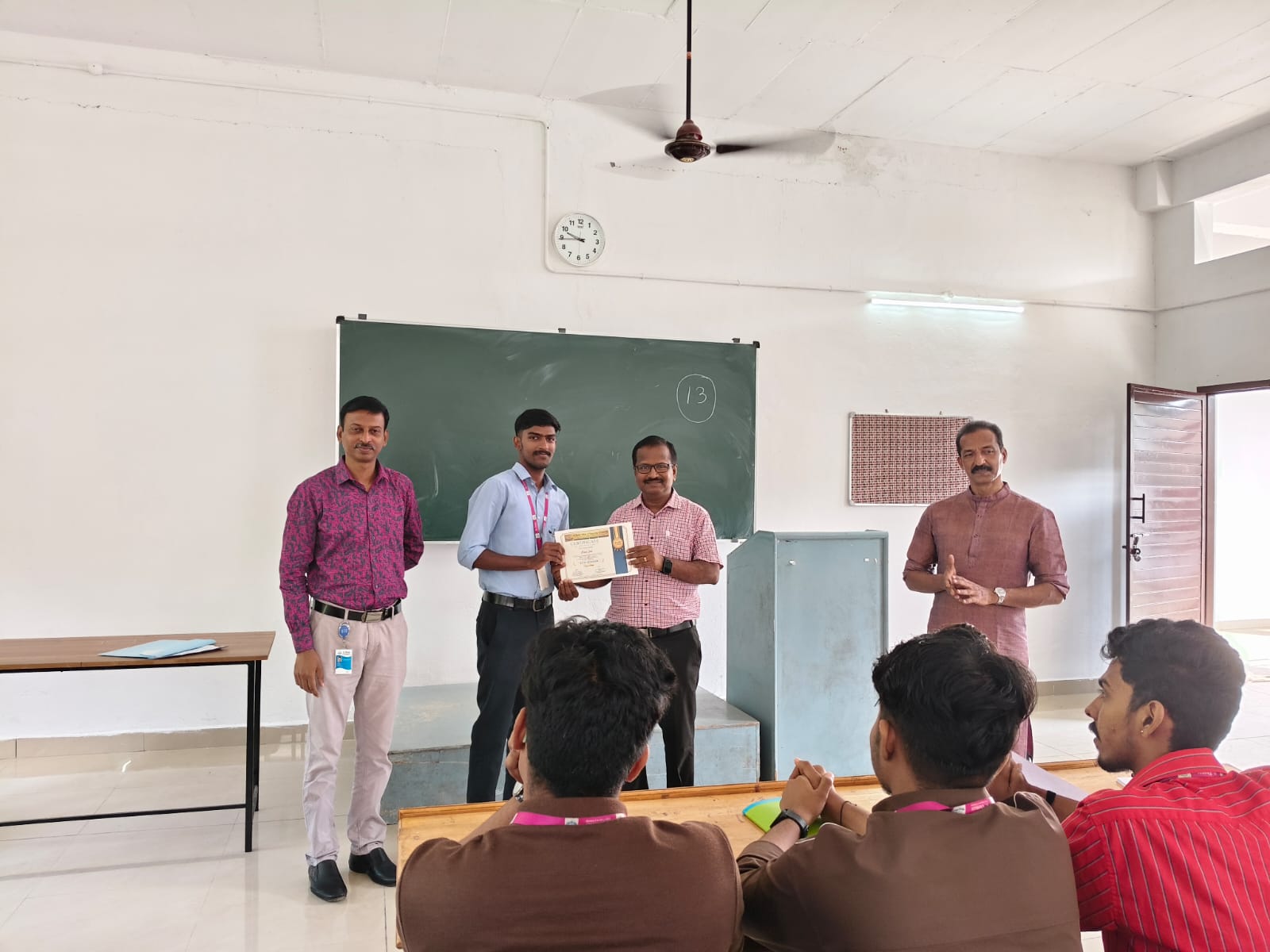
In line with the department's commitment to academic excellence, the Semester 3 performance review for the 2024-2028 batch has concluded. Students who have attained a Semester Grade Point Average (SGPA) of 8.0 or higher are officially recognized for their scholarly achievement. This threshold acknowledges the significant effort and technical proficiency demonstrated by these students in their advanced coursework. By highlighting these high-achievers, the department reinforces its culture of academic rigor and provides motivation for continued success throughout the students' engineering education. The department remains dedicated to supporting all students in achieving such benchmarks of excellence.
Key Takeaway
Students attaining an SGPA of 8.0 or higher in Semester 3 are formally acknowledged.