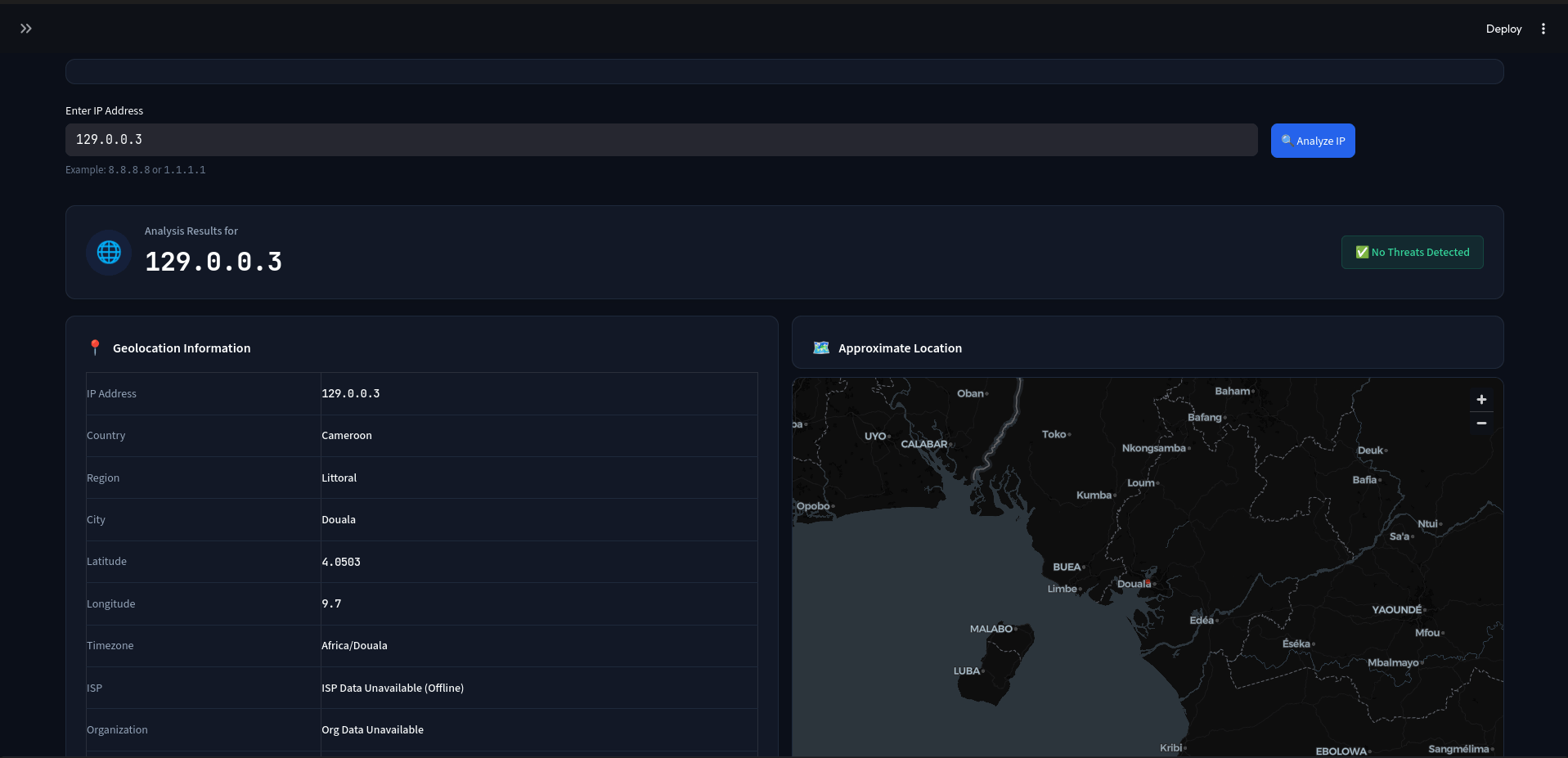
As the digital landscape expands, understanding the origin and intent of network traffic is a foundational skill in cybersecurity. While theoretical knowledge of IP addressing and network protocols is essential, I wanted to bridge the gap between classroom concepts and real-world application. To achieve this, I developed a real-time IP Geolocation and Threat Analysis Dashboard.
The Tech Stack & Environment
To simulate a genuine security analysis workflow, I developed this project entirely within Kali Linux—the industry-standard operating system for penetration testing and security research. The core engine of the tool was written in Python due to its robust networking libraries and API handling capabilities. To make the data accessible and visually intuitive, I utilized Streamlit, a Python micro-framework, to transform raw backend terminal outputs into a clean, interactive web frontend.
Core Functionalities
The dashboard acts as an all-in-one visual portal for security triage, offering three main capabilities:
- Geographic Mapping: The tool queries external APIs to instantly extract precise location metrics for any target IP address. This includes pinpointing the city, region, country, and mapping coordinates.
- Network & ISP Profiling: Beyond just location, the dashboard identifies the Internet Service Provider (ISP), Autonomous System Number (ASN), and the specific organization assigned to the IP. This is crucial during an investigation to distinguish between standard residential user traffic and corporate or cloud-hosting infrastructure.
- Threat Intelligence Indicators: The most critical feature is the threat analysis component. The application evaluates incoming IP metadata against basic security flags to highlight potential risks, alerting the user if the node is acting as a VPN, a known proxy, or a potentially malicious actor.
Practical Application & Learning Outcomes
When a web server registers a suspicious login attempt or unusual access logs, rapid IP reconnaissance is the very first step in incident response. This project solidified my understanding of network intelligence gathering, secure API integration, and how to build lightweight custom security tooling.
Future Enhancements
This initial build is just the beginning of my exploration into cybersecurity development. In future iterations, I plan to expand the tool's threat-hunting capabilities by integrating enterprise-grade databases like VirusTotal and AbuseIPDB. Additionally, I aim to implement bulk-processing features via CSV uploads, allowing for the simultaneous risk-scoring of massive server logs.